
FRACS Ortho
fix it.
168 sourced study notes across the AOA Orthopaedic Surgery curriculum (168 LOs, 18 sections). Tier-graded written-exam practice, a Phase 2 viva simulator across all 5 segments with voice mode, and unlimited MCQ practice. 10,564 LO-aligned flashcards across 92 topics. Built for the breadth the orthopaedic fellowship demands.
Your PRIMEX account, now in your pocket.
Specialist unlocks every PRIMEX exam track. Accessible is limited to AMC and Medical Student. Subscribe on the website or in the iPhone app, then use the same account to keep your access and progress together.

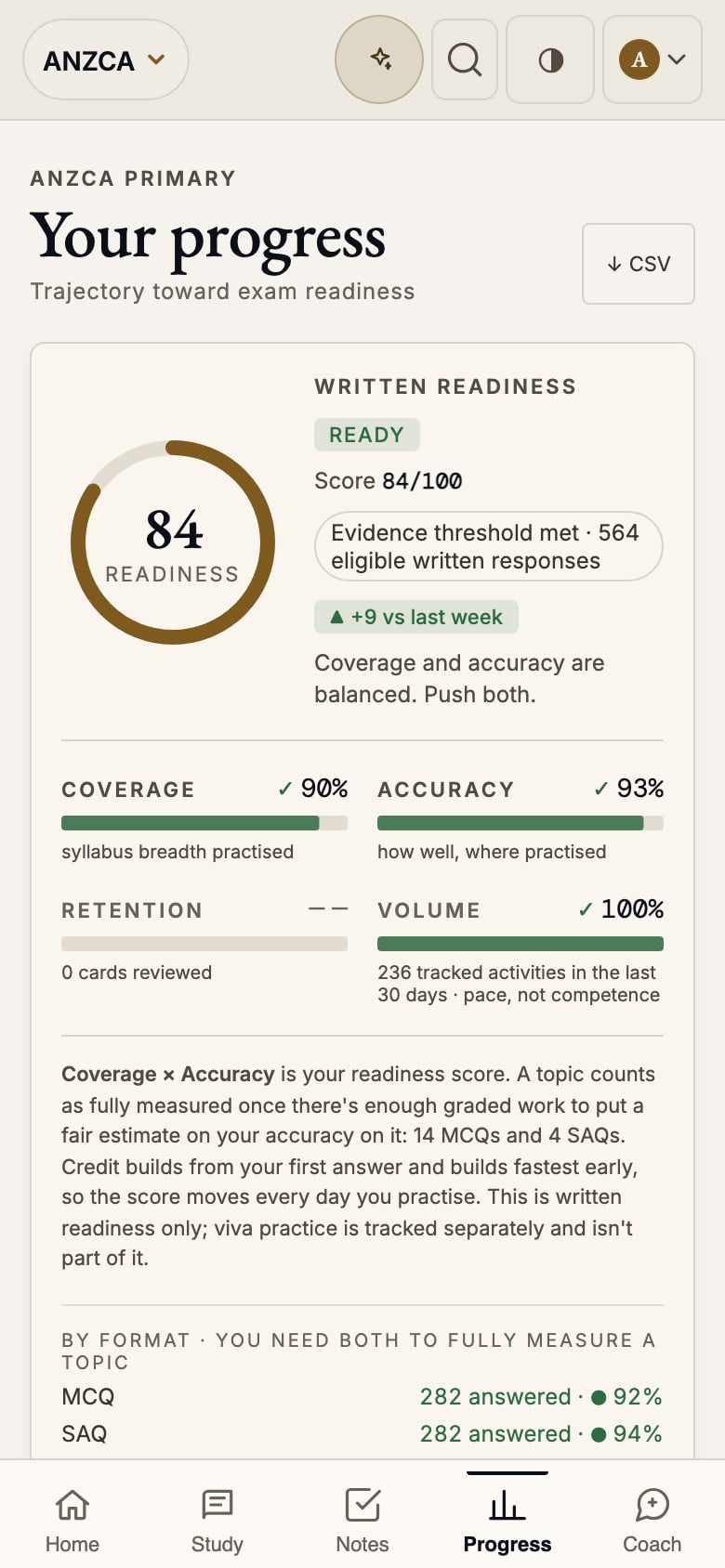
FRACS Orthopaedic Surgery Fellowship Exam Dates 2026-2027
Published dates for the upcoming sittings. Always confirm against the official RACS Fellowship Examination page before scheduling. I refresh this section quarterly as new windows are announced.
- Written 2026.19 Apr 2026
- Clinical/Viva 2026.1 (Wellington)23-24 May 2026
- Clinical/Viva 2026.1 (Melbourne)30-31 May 2026
- Written 2026.26 Aug 2026
- Clinical/Viva 2026.2 (Sydney)19-20 Sep 2026
- Written 2027.111 Mar 2027
- Clinical/Viva 2027.1 (Christchurch)15-17 May 2027 (Ortho/GS only)
- Clinical/Viva 2027.1 (Melbourne)21-24 May 2027 (all specialties)
- Written 2027.219 Aug 2027
- Clinical/Viva 2027.2 (Adelaide)22-25 Oct 2027 (all specialties)
Same RACS Fellowship Exam dates as General Surgery. Limited Australian capacity; overflow placements run in NZ.
Inside PRIMEX, in under a minute
Recorded in the app, with real FRACS Orthopaedic Surgery questions and notes. No sound needed to follow it.
Topics tested in the FRACS Orthopaedic Surgery exam
Practice on real radiology images
Used with permission from LearningRadiology.com. Every image links to its full teaching case. Tap to open.
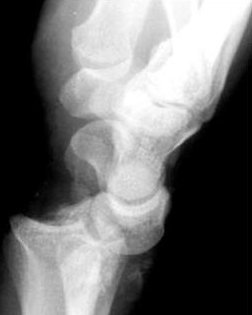 Barton fracture (volar shear of distal radius)
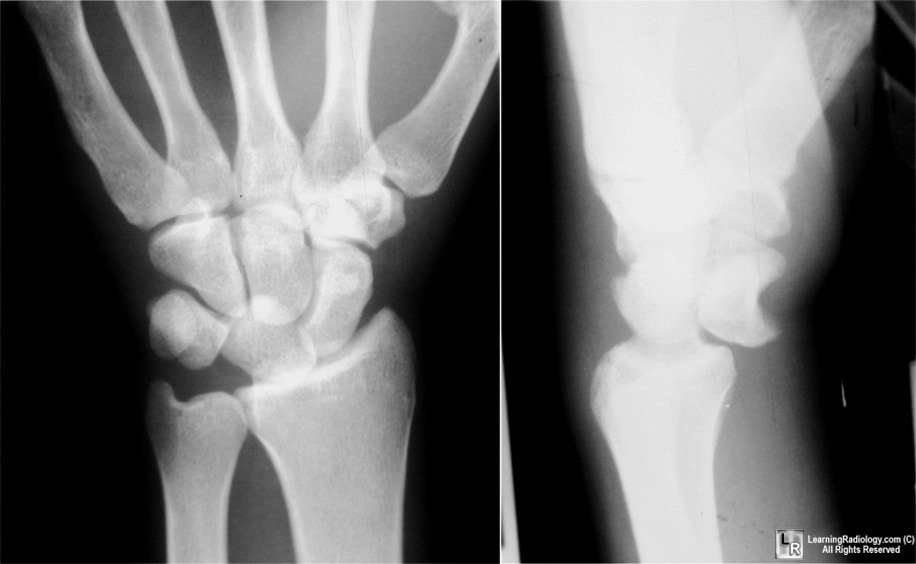 Perilunate dislocation
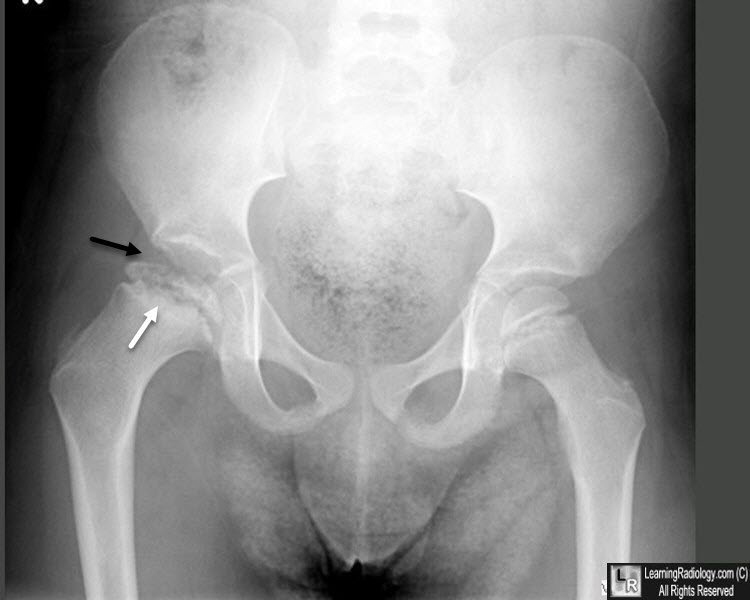 Legg-Calvé-Perthes disease
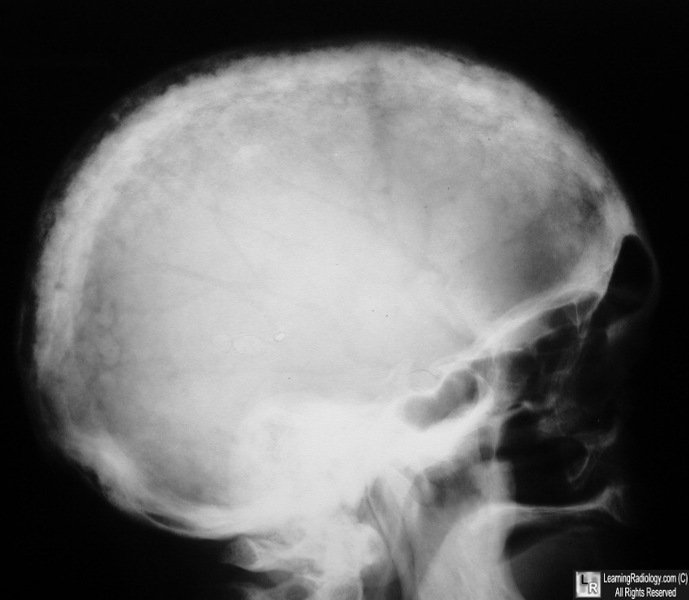 Paget disease of skull (cotton-wool appearance)
How candidates prepare for the FRACS Orthopaedic Surgery
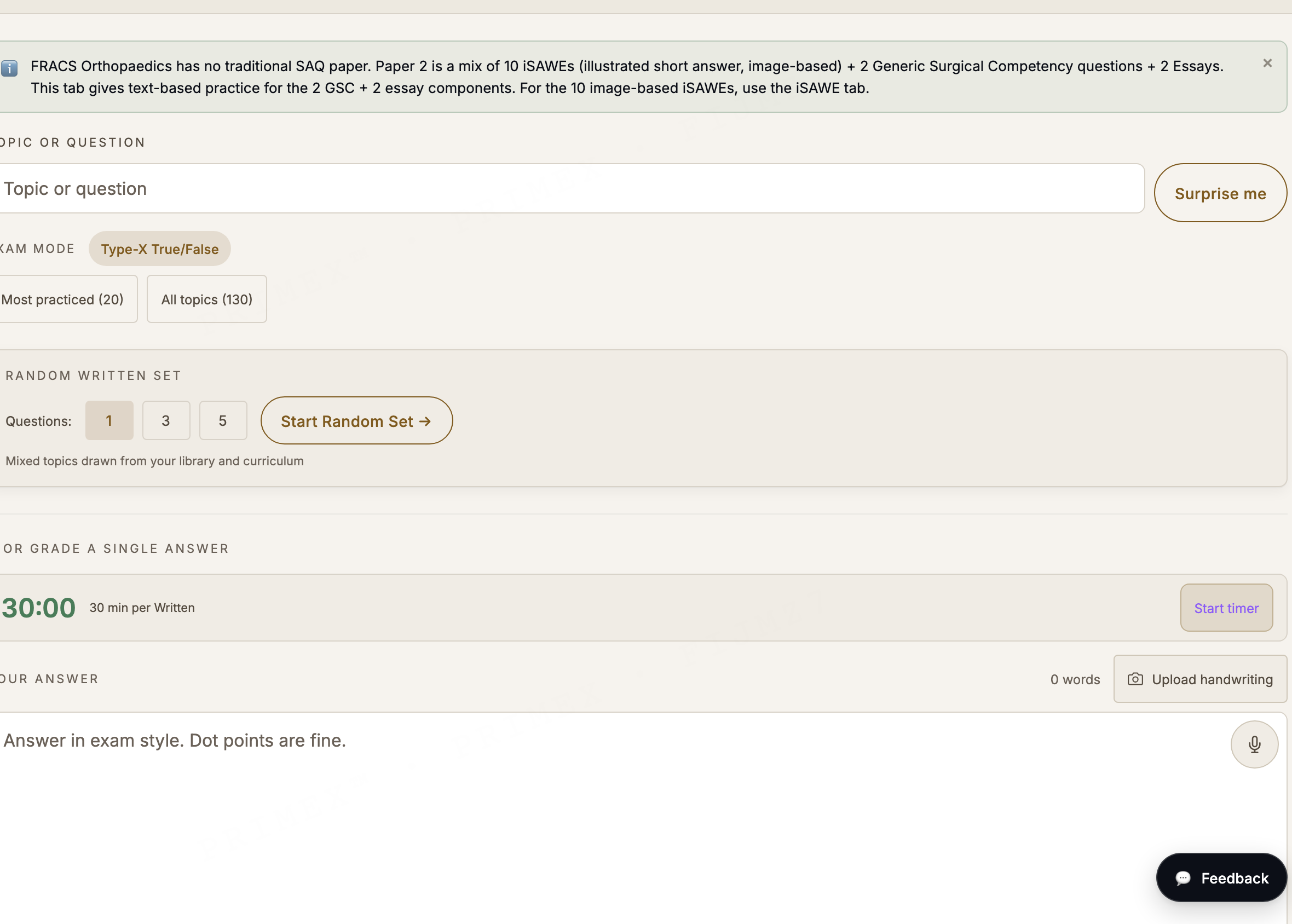
The FRACS Ortho Phase 1 written exam has two papers: Paper 1 uses Type-X True/False MCQs (75 stems, 5 T/F distractors each); Paper 2 mixes iSAWEs, Generic Surgical Competency questions, and Essays. PRIMEX grades your practice attempts and explains the clinical reasoning behind each answer.
- MCQ and written-response practice across all 18 AOA curriculum sections
- Distractor explanations; why each wrong answer is wrong
- Linked to relevant study notes and flashcards for immediate consolidation
- Performance tracking by domain and topic over time
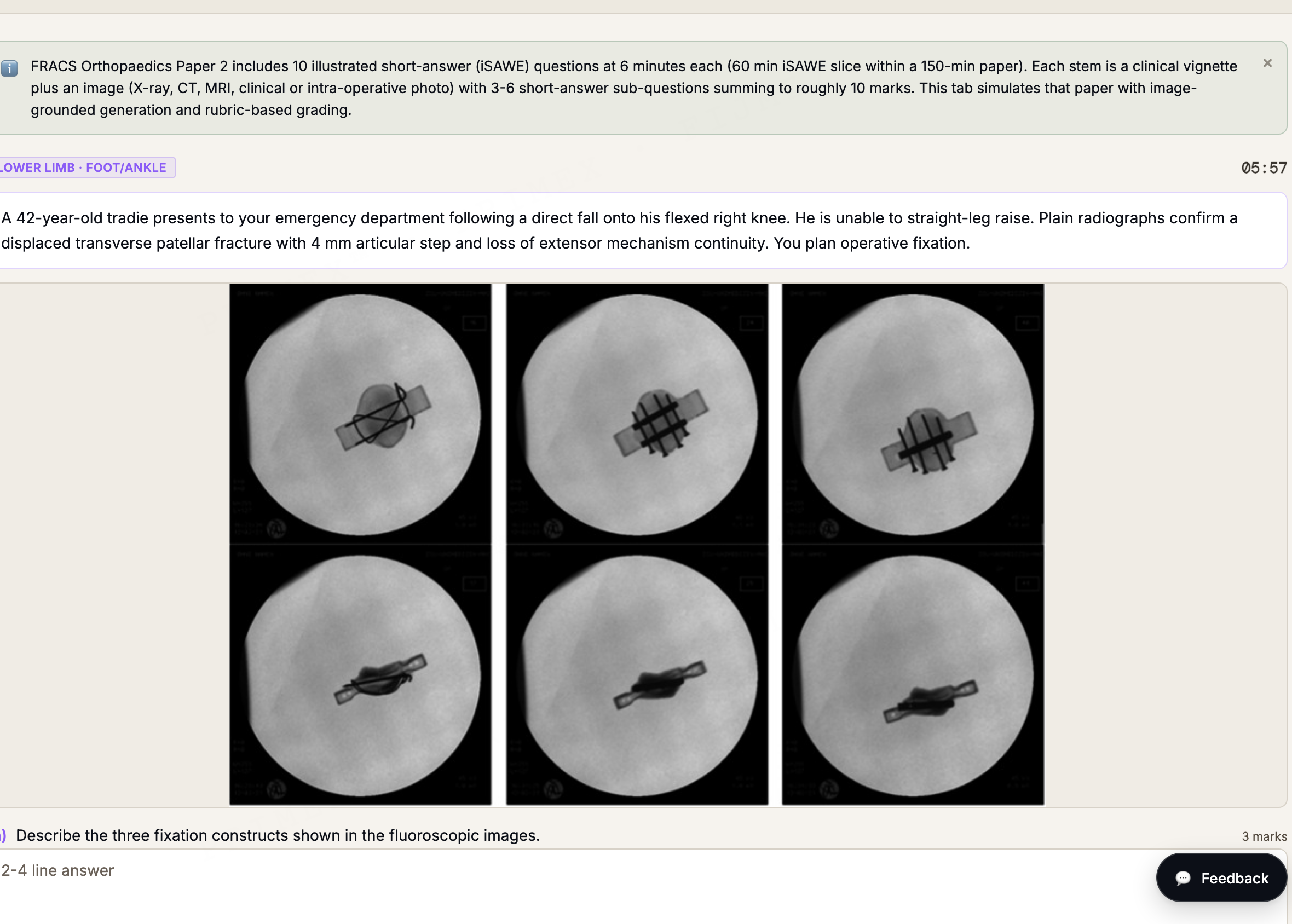
The FRACS Ortho Phase 1 Paper 2 includes ten illustrated short-answer questions (iSAWEs) at six minutes each: clinical vignette plus an image (X-ray, CT, MRI, clinical or intra-operative photo) with 3 to 6 sub-questions worth roughly ten marks. PRIMEX generates fresh iSAWEs grounded in the AOA-mapped study notes, marks each sub-question against a reference answer, and shows you which marking points your response covered.
- Ten-stem mock paper at the real 6-minute pace
- Five question angles per stem: diagnosis, investigations, classification, management, complications
- Image library across trauma, arthroplasty, paediatric and spine
- Grounded in the FRACS Ortho curriculum so reference answers cite your own study notes
- Per-sub-question marking, not a single tier
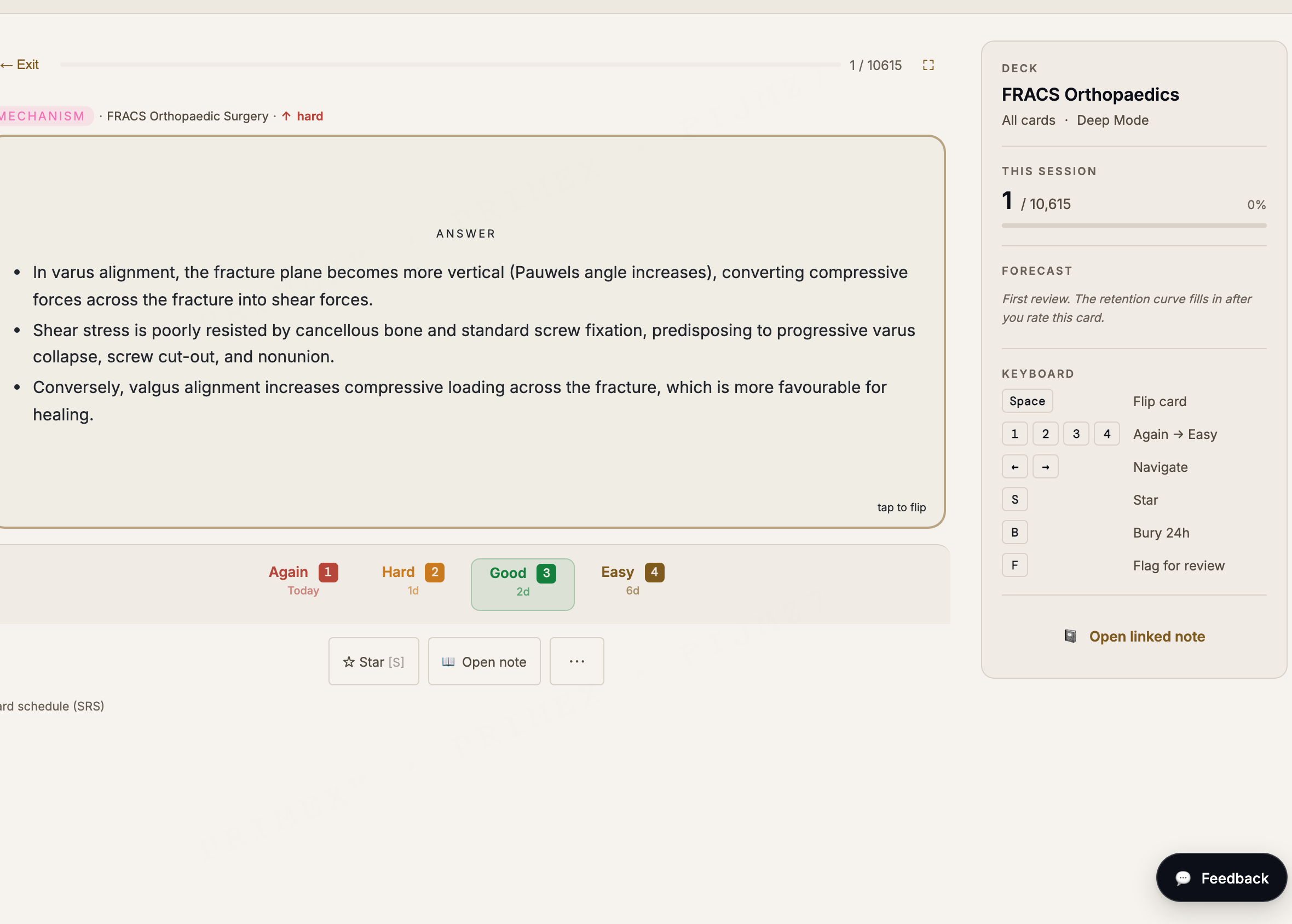
10,564 spaced-repetition flashcards aligned to the AOA curriculum's learning-objective structure across 92 topic buckets. Card types include classification rules, biomechanical formulae, vignette reasoning, and operative pearls. Every card ID is linked to an AOA LO so cards surface alongside the relevant study note and viva debrief.
- Rebuilding per learning objective from the study notes pipeline
- Planned card types: AO classification tables, Salter-Harris staging, Garden classification, surgical approach anatomy (intervals, nerves at risk, position)
- Custom viva-station decks planned for the final weeks before Phase 2
- One click from card to full study note when the deck lands
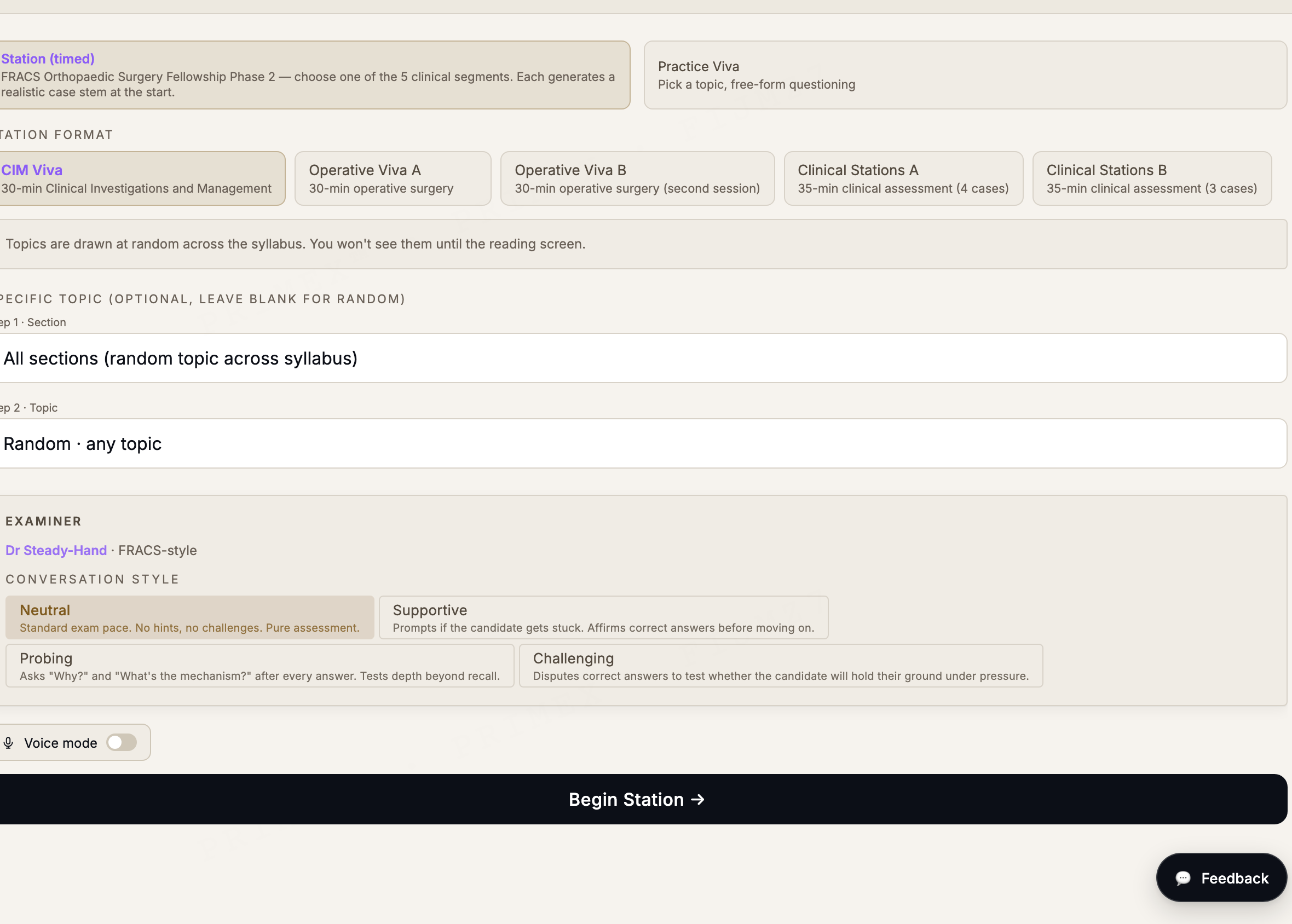
The FRACS Ortho Phase 2 runs over two days across five segments, all computer-, video-, or patient-based with no physical models or specimens: CIM Viva (image-based differentials and management, 30 min), Operative Surgery Viva 1 and 2 (computer-based operative scenarios, 30 min each), and Clinical Cases 1 and 2 (36 min each; CC1 is four video scenarios, CC2 is three live patients). PRIMEX simulates all segments with AI examiners and voice mode so you can rehearse speaking your reasoning aloud.
- CIM Viva; MRI, CT, bone scans, and histology images, differentials and management discussion
- Operative Surgery Viva; talk through operative steps for computer-based scenarios shown on screen
- Clinical Cases 1 and 2; CC1 is four video scenarios, CC2 is three live-patient history and examination cases
- Voice mode; speak your answers and receive real-time follow-up questions
- Examiner feedback on structure, depth, and clinical safety
Work through a full mock viva out loud with this college's AI examiner, in real time. Answer by voice, get probed and interrupted like you would in the real viva, then step out to a graded debrief: how you performed on the station, the topics you covered, your strengths and gaps, and how you handled the pressure. Every mock viva feeds your weak-topic plan, so what to practise next is always clear.
- Real-time spoken viva in this college's examiner voice, fully interruptible
- Graded debrief on every station: your performance tier, the topics you covered, and the gaps to close
- Communication and composure feedback: pacing, hesitation, clarity under pressure
- Weak topics flow straight into your study plan and daily practice
- Part of PRIMEX Pro, with monthly mock vivas included
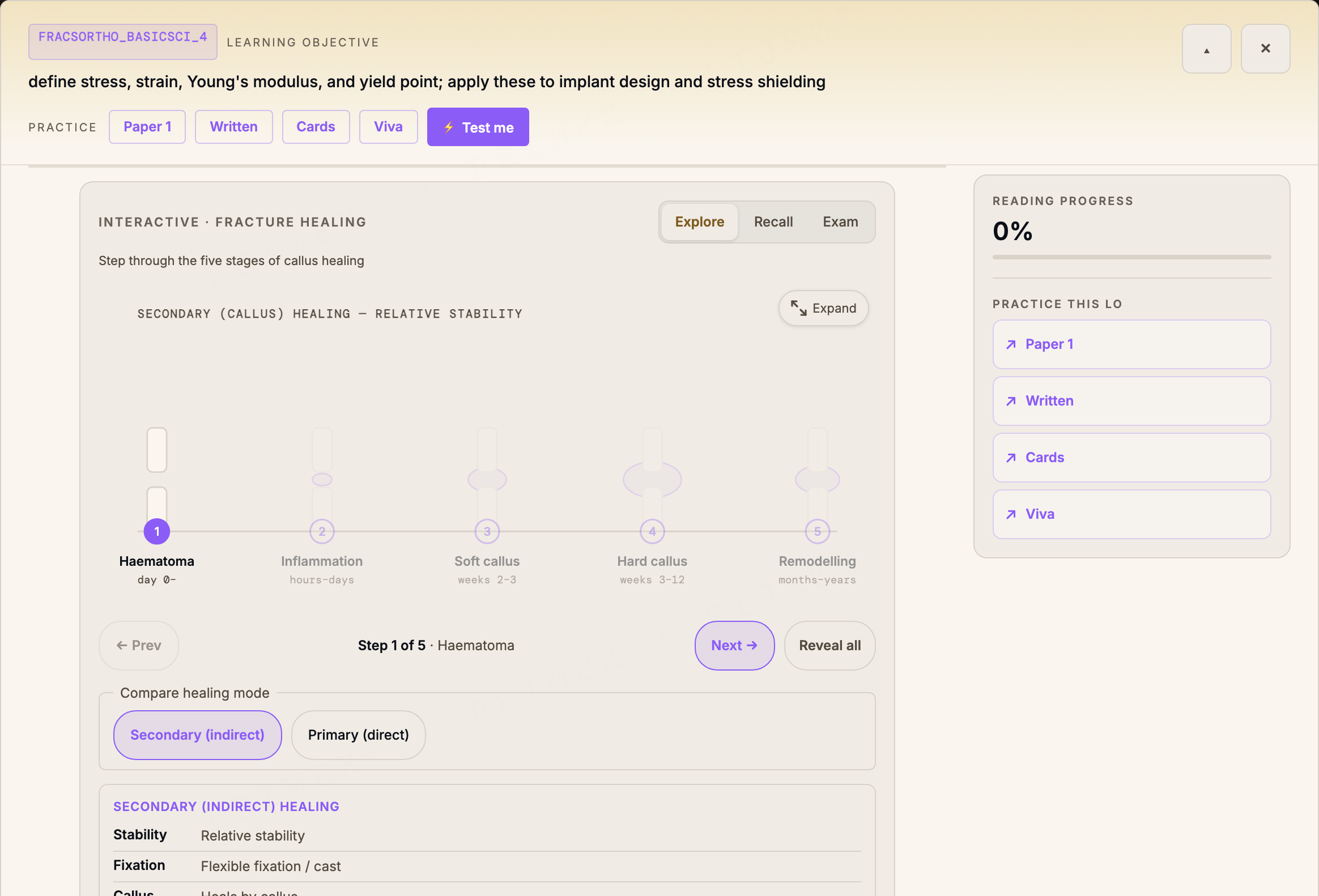
168 sourced study notes across the AOA curriculum, organised per learning objective. Every note follows the same seven-section structure: overview, pathophysiology, classification, investigations, management, complications, and exam focus. The exam-focus section condenses what an orthopaedic viva examiner most commonly asks about that topic.
- 168 study notes mapped across the AOA curriculum: 168 learning objectives, 18 sections
- Seven-section structure: overview → pathophysiology → classification → investigations → management → complications → exam focus
- Curriculum panel on every note showing which AOA LOs that topic addresses
- References to AO Foundation principles, BOAST guidelines, and landmark RCTs
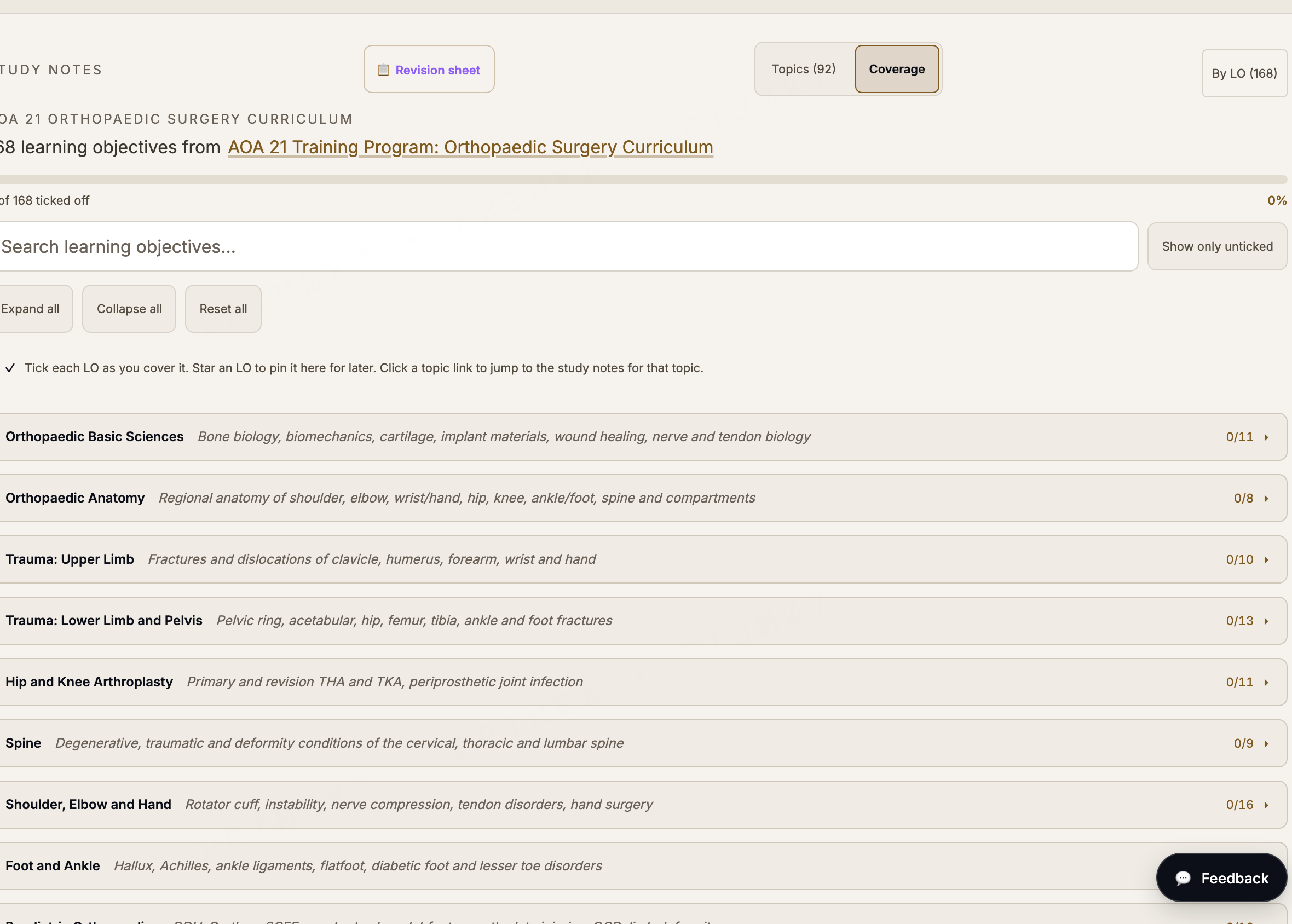
The FRACS Ortho curriculum is structured across 18 AOA sections. PRIMEX's curriculum tab maps every learning objective to the study notes and flashcards that cover it, with checkboxes and a persistent progress bar so you know exactly which sections are solid and which need another pass before the exam.
- All 168 AOA curriculum LOs mapped across 18 sections
- Checkbox completion with localStorage persistence across sessions
- Click any LO to jump directly to the relevant study note
- Overall and per-section progress bars at a glance
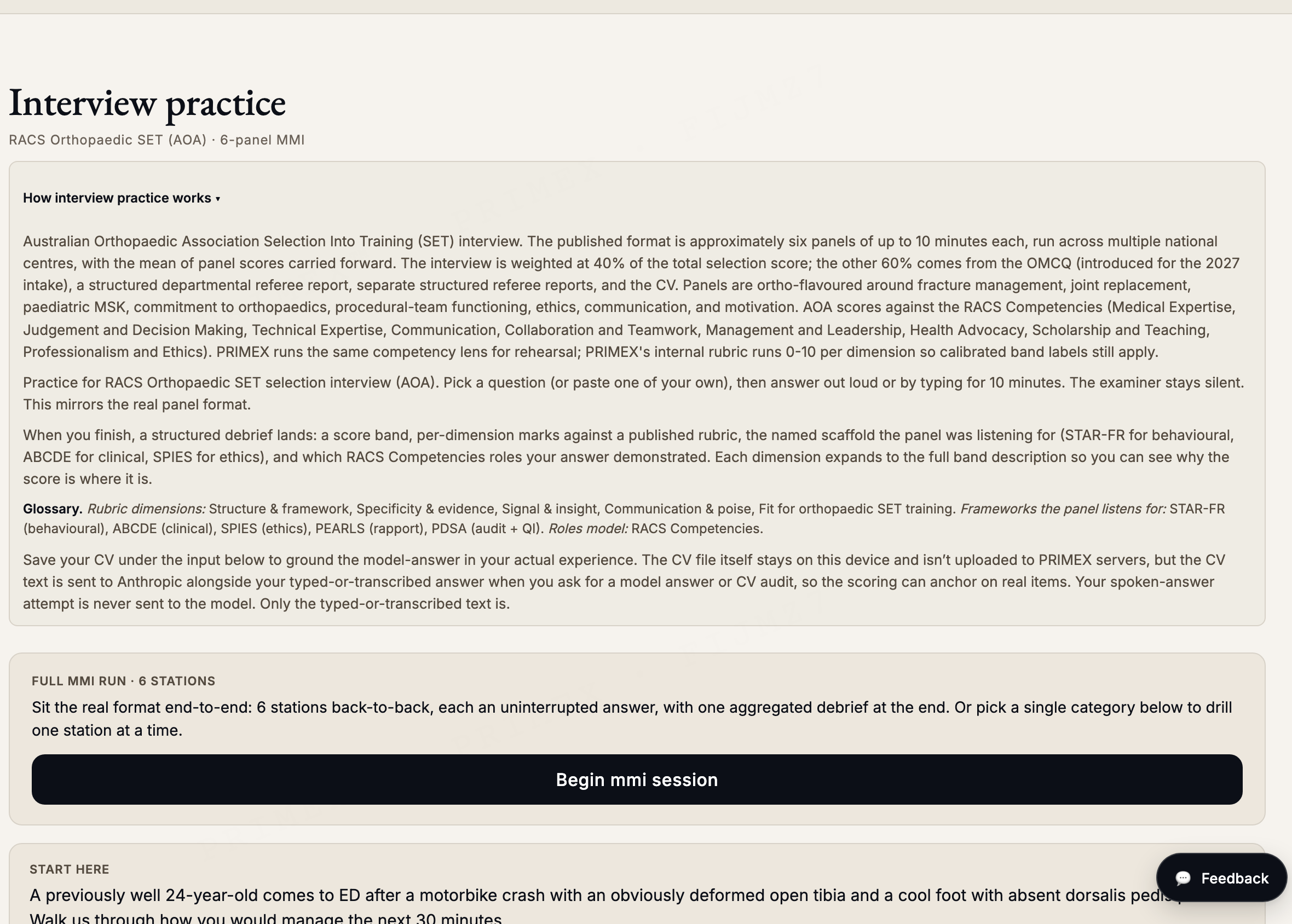
Rehearse the AOA-administered RACS Orthopaedic SET selection MMI format. Six panels of 10 minutes each, with the interview weighted at 40% of the total selection score per the AOA 2025-intake regulations (alongside CV, structured referees, and the new Orthopaedic MCQ from the 2027 intake). Stations cover orthopaedic clinical scenarios (fracture management, joint replacement, paediatric musculoskeletal), commitment to orthopaedics (research, fellowships, rural exposure), team functioning in a procedural environment, ethics, communication, and motivation. The debrief returns a tier band, per-dimension rubric scores against the RACS Competencies framework, and framework beat checks per station.
- 6-panel MMI format with 10-minute slots per panel
- Mirrored from the AOA 2025-intake regulations + 2026/2027 intake changes page
- Stations cover orthopaedic clinical scenarios, commitment to ortho, team functioning, ethics, communication, motivation
- Calibrated rubric scoring per dimension with full band descriptions
- RACS Competencies (NOT CanMEDS) demonstrated and missed per station
- Framework beat tracking for STAR-FR, SPIES, PEARLS, PDSA, ABCDE, ISBAR
FRACS Orthopaedic Surgery format and structure: Fellowship Examination
The FRACS Orthopaedic Surgery Fellowship Examination is conducted jointly by the Royal Australasian College of Surgeons (RACS) and the Australian Orthopaedic Association (AOA). It consists of a Written Examination and a Viva Examination, typically sat in sequence over the final years of SET training.
Phase 1 (Written) has two papers. Paper 1 is 75 Type-X True/False MCQs (2 hrs, no negative marking). Paper 2 (2.5 hrs) mixes 10 iSAWEs (illustrated short-answer, image-based), 2 Generic Surgical Competency questions, and 2 Essays. Phase 1 must be passed before Phase 2 can be attempted.
Phase 2 (Clinical/Viva) runs over two days across 5 segments: CIM Viva (30 min), Operative Surgery Viva 1 and 2 (30 min each), and Clinical Cases 1 and 2 (36 min each). All 7 segments across both phases must pass; one failure may be compensated at the Specialty Court's discretion. PRIMEX is built by Dr Jay Marshall, an anaesthetics registrar in Taree, NSW.
- OrganiserRoyal Australasian College of Surgeons (RACS) in conjunction with the Australian Orthopaedic Association (AOA)
- Phase 1 formatPaper 1: 75 Type-X T/F MCQs (2 hrs). Paper 2: 10 iSAWEs + 2 Generic SAQs + 2 Essays (2.5 hrs)
- Phase 2 formatCIM Viva (30 min) · Operative Surgery Viva 1 and 2 (30 min each) · Clinical Cases 1 and 2 (36 min each)
- CurriculumAOA curriculum; 168 learning objectives across 18 sections including basic sciences, anatomy, trauma, and arthroplasty
- Training pathwaySET (Surgical Education and Training) programme; typically 5 years post-GSSE
- PrerequisiteRACS GSSE (Generic Surgical Sciences Examination); required before entering SET orthopaedics
Free notes are just the start.
Get 168 study notes, 10,564 spaced-repetition flashcards, unlimited question practice and the full exam simulator. Free for 7 days, then from A$44.99/month.
Start free trial, 7 days free Cancel anytime · no commitmentCommon questions about the FRACS Orthopaedic Surgery exam
Specialist pricing and 7-day free trial
Specialist unlocks every PRIMEX exam track: the specialist pathways, AMC and Medical Student. Every study tool is included, with no per-feature paywalls.
- ✓ Every exam track: specialist pathways, AMC & Medical Student
- ✓ Flashcards with spaced repetition & MCQ drill
- ✓ Study notes for every curriculum topic
- ✓ SAQ library & sessions
- ✓ Study plan with pace tracking
- ✓ Curriculum tracker & readiness insights
- ✓ Every exam track: specialist pathways, AMC & Medical Student
- ✓ Flashcards with spaced repetition & MCQ drill
- ✓ Study notes for every curriculum topic
- ✓ SAQ library & sessions
- ✓ Study plan with pace tracking
- ✓ Curriculum tracker & readiness insights
- ✓ Every exam track: specialist pathways, AMC & Medical Student
- ✓ Flashcards with spaced repetition & MCQ drill
- ✓ Study notes for every curriculum topic
- ✓ SAQ library & sessions
- ✓ Study plan with pace tracking
- ✓ Curriculum tracker & readiness insights
You'll land on a confirmation page. Tap the sign-up button (or sign in if you already have an account) and your subscription links automatically. If you close the page first, just use the same email when you sign up and it'll still link.