
ACEM Fellowship
consultant-ready.
268 sourced study notes and 8,843 spaced-repetition flashcards across the ACEM Fellowship curriculum's 30 sections plus PRIMEX supplementary topics. AI SAQ grading on the Fail / Borderline / Pass / Distinction tier, a timed OSCE simulator across all six station types, and an unlimited Fellowship-level MCQ library. Built for the written paper and the 12-station OSCE.
- Curriculum objectives mapped
- AI SAQ grading
- Twelve-station OSCE simulator
- 7-day free trial
Your PRIMEX account, now in your pocket.
Specialist unlocks every PRIMEX exam track. Accessible is limited to AMC and Medical Student. Subscribe on the website or in the iPhone app, then use the same account to keep your access and progress together.

ACEM Fellowship Exam Dates 2026-2027
Published dates for the upcoming sittings. Always confirm against the official ACEM exam calendar before scheduling. I refresh this section quarterly as new windows are announced.
- Fellowship Written 2026.122 May 2026
- Fellowship Written 2026.220 Nov 2026
- Fellowship Clinical (OSCE) 2026.117-20 and 24-25 Mar 2026
- Fellowship Clinical (OSCE) 2026.28-11 and 15-16 Sep 2026
- Fellowship Written 2027.121 May 2027
- Fellowship Written 2027.219 Nov 2027
- Fellowship Clinical (OSCE) 2027.116-19 Mar 2027 (Cliftons Sydney)
- Fellowship Clinical (OSCE) 2027.27-10 Sep 2027 (Cliftons Sydney)
OSCE applications close ~6-8 weeks before sitting. 2027 OSCE eligibility deadlines: 8 Feb 2027 (2027.1) and 9 Aug 2027 (2027.2).
Inside PRIMEX, in under a minute
Recorded in the app, with real ACEM Fellowship questions and notes. No sound needed to follow it.
Topics tested in the ACEM Fellowship exam
Practice on real radiology images
Used with permission from LearningRadiology.com. Every image links to its full teaching case. Tap to open.
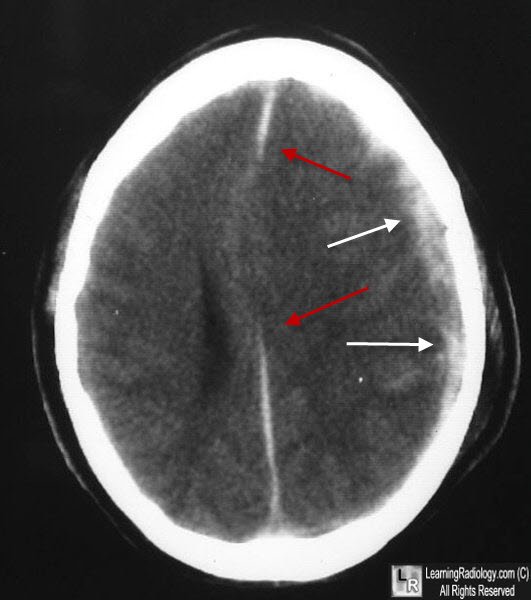 Acute subdural haematoma
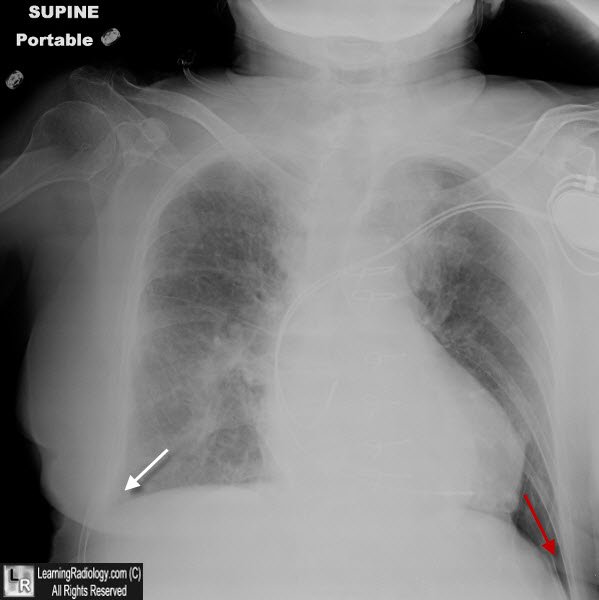 Deep sulcus sign (supine pneumothorax)
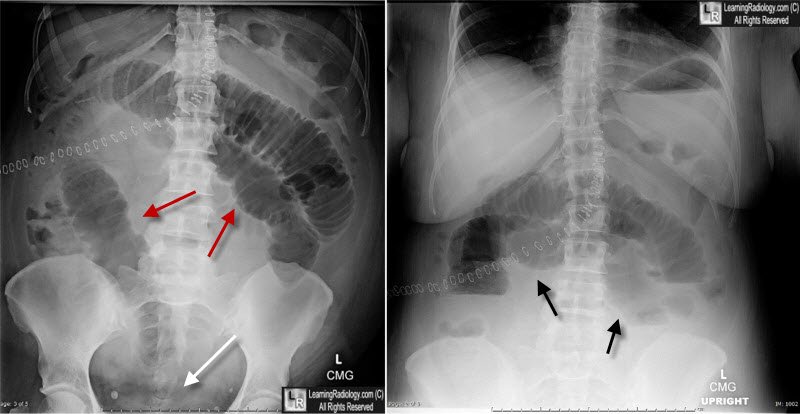 Small bowel obstruction
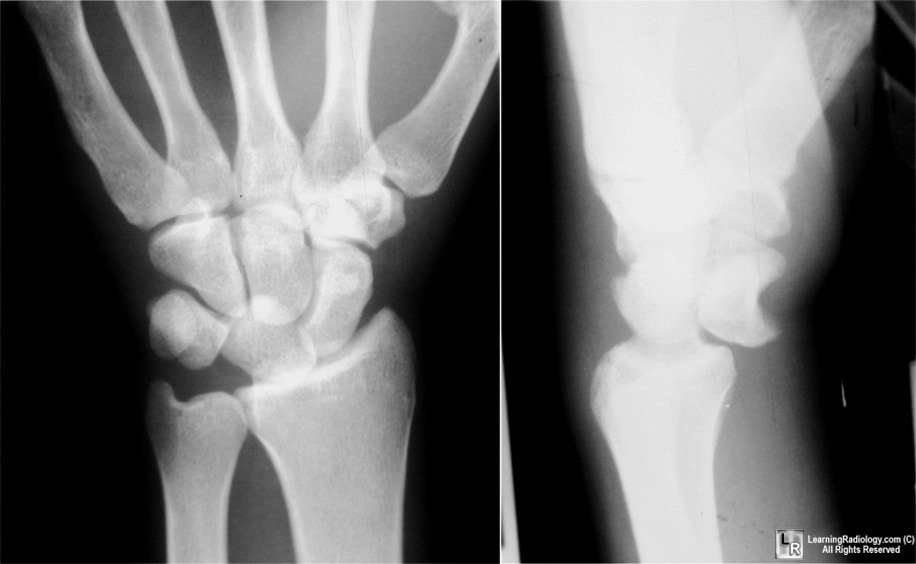 Perilunate dislocation
How candidates prepare for the ACEM Fellowship
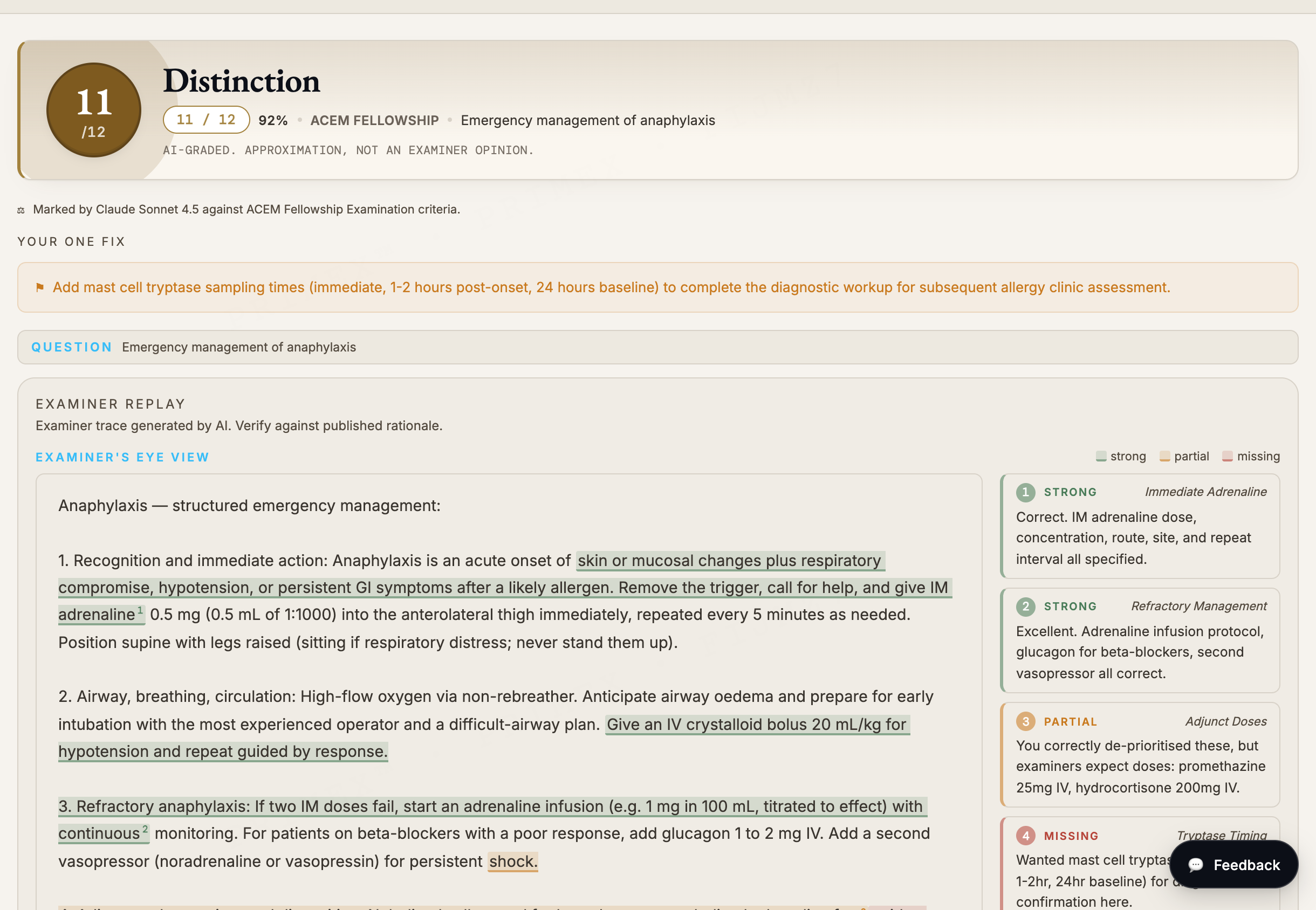
Write a Fellowship SAQ answer and get an examiner-style debrief: tier (Fail / Borderline / Pass / Distinction), a marking checklist with every point flagged as hit or missed, an examiner comment, and a model answer. Calibrated to ACEM examiner report themes including ABCDE prioritisation, specific drug doses, and disposition decisions.
- Fail / Borderline / Pass / Distinction tier with score estimate out of 360
- Graded to the standard of ACEM Fellowship written examiner reports
- Model answer with specific drug doses, routes, and time-critical priorities
- Feedback on ABCDE structure and correct prioritisation order
- AI question generation in Fellowship SAQ format, no repetition
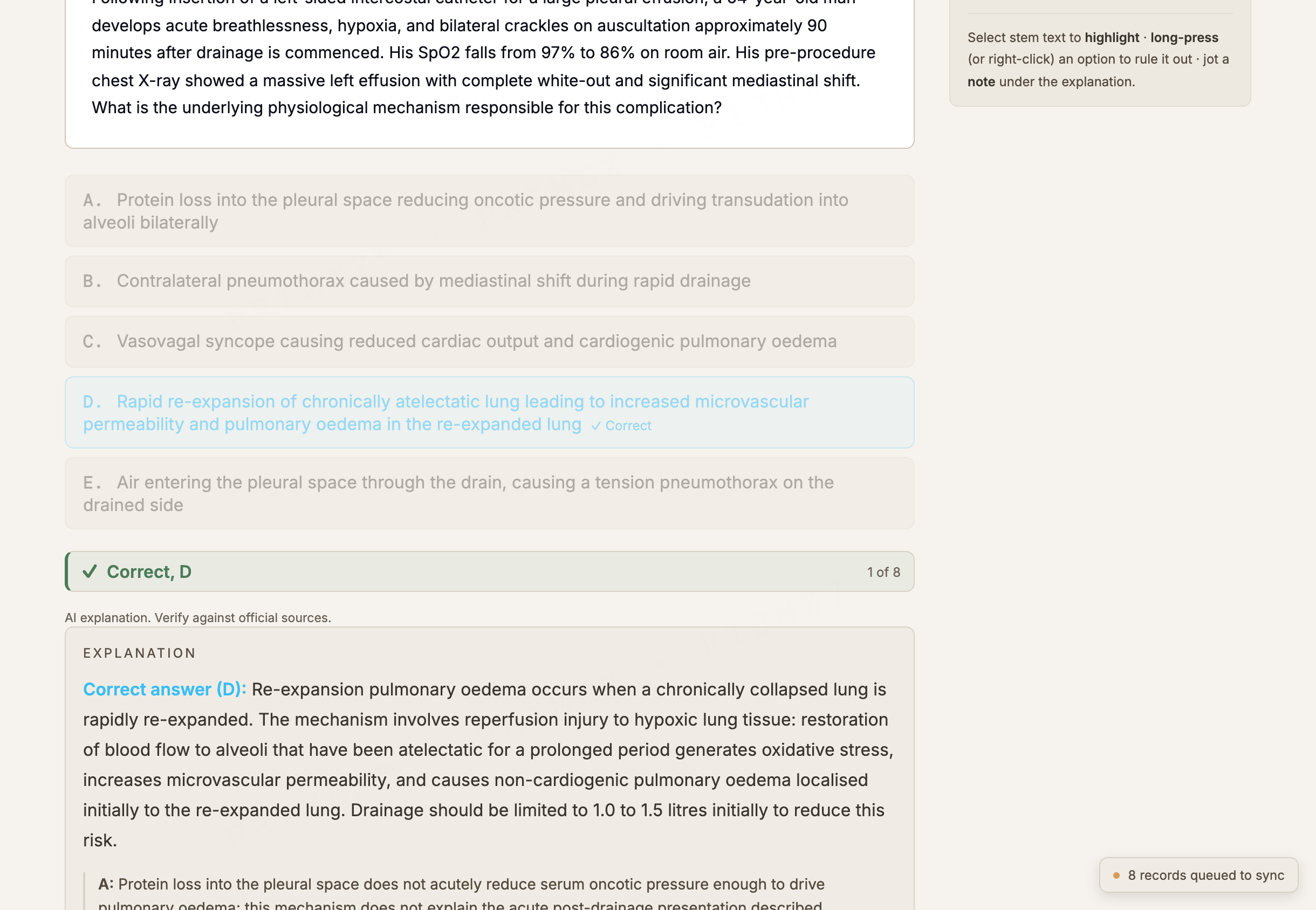
Consultant-level single-best-answer MCQs mapped to the FACEM curriculum across all systems. Every question has a full explanation for each option including the distractors. Community answer distributions show how other candidates responded, which is a useful calibration signal in the final weeks before the exam.
- MCQs across all FACEM curriculum sections and OSCE station types
- Consultant-level clinical reasoning, not basic science recall
- Explanation for every option, including the distractors
- Community answer distribution after each question
- Timed mock mode replicating written exam conditions
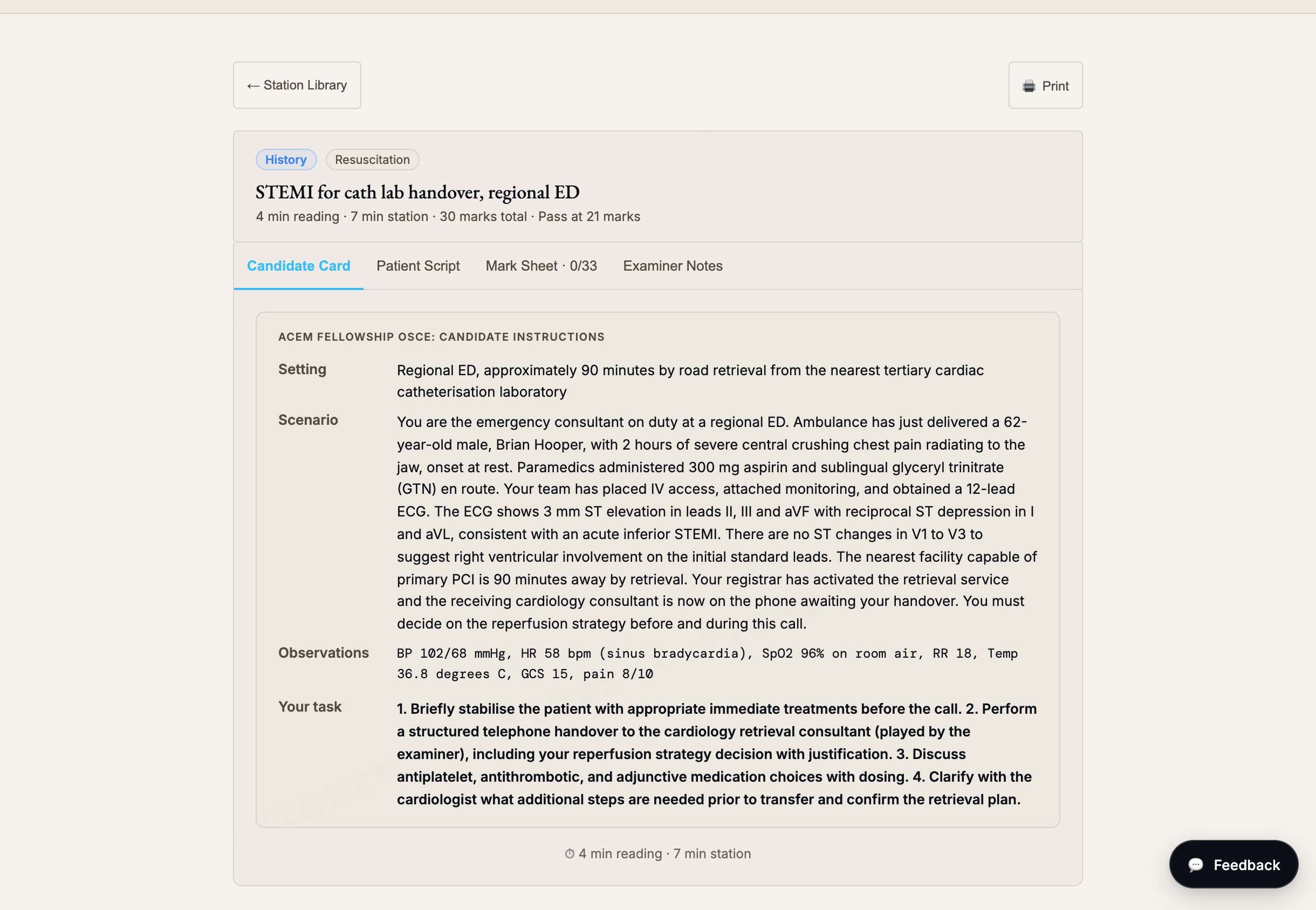
Runs timed ACEM Fellowship OSCE stations: 4 minutes reading time, then 7 minutes of structured examination. The AI examiner matches the station type; clinical management, communication, physical examination, teaching, clinical synthesis, or case-based discussion. Voice mode transcribes spoken responses using medical speech recognition.
- All six ACEM OSCE station types covered, not just clinical management
- Timed format: 4 min reading, 7 min active station, just like the real thing
- Communication stations: breaking bad news, error disclosure, consent, mental health
- Teaching stations: ABG interpretation, ECG reading, RSI steps
- Debrief with tier and specific learning points per station type
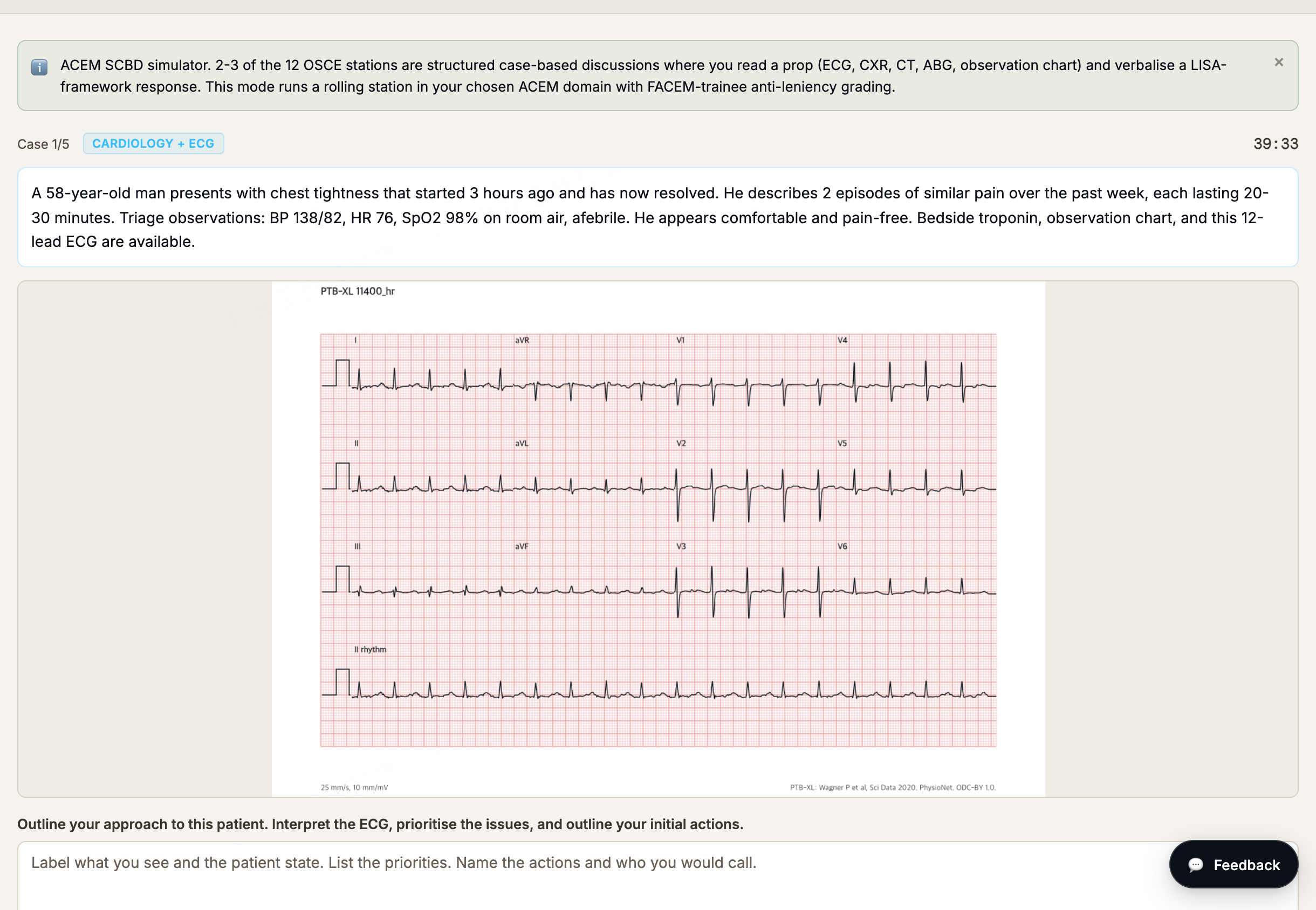
2-3 of the ACEM Fellowship OSCE's 12 stations are Structured Case-Based Discussions where you read a prop (ECG, CXR, CT, ABG, observation chart) and verbalise a LISA-framework response: Label, Issues and priorities, Send for help, Actions. This tab runs a rolling station in your chosen ACEM domain against a real per-exam image library, including PTB-XL cardiology ECGs and sourced radiology images, then grades each case against a per-rubric breakdown with FACEM-trainee anti-leniency calibration.
- Eight image-prop station themes: resuscitation, cardiology + ECG, respiratory + CXR, trauma + imaging, neurology + CT or MRI, toxicology, paediatrics, procedural + ultrasound
- Real PTB-XL ECG renders for the cardiology station; sourced radiology and pathology images for the others
- LISA framework grading (Label, Issues and priorities, Send for help, Actions) against a per-case rubric
- FACEM-trainee anti-leniency calibration: a missed time-critical action (cath lab activation on a STEMI, massive transfusion in haemorrhagic shock) fails even when surrounding content is acceptable
- Rolling station mode: 5 image-anchored cases over about 40 minutes in your chosen ACEM domain
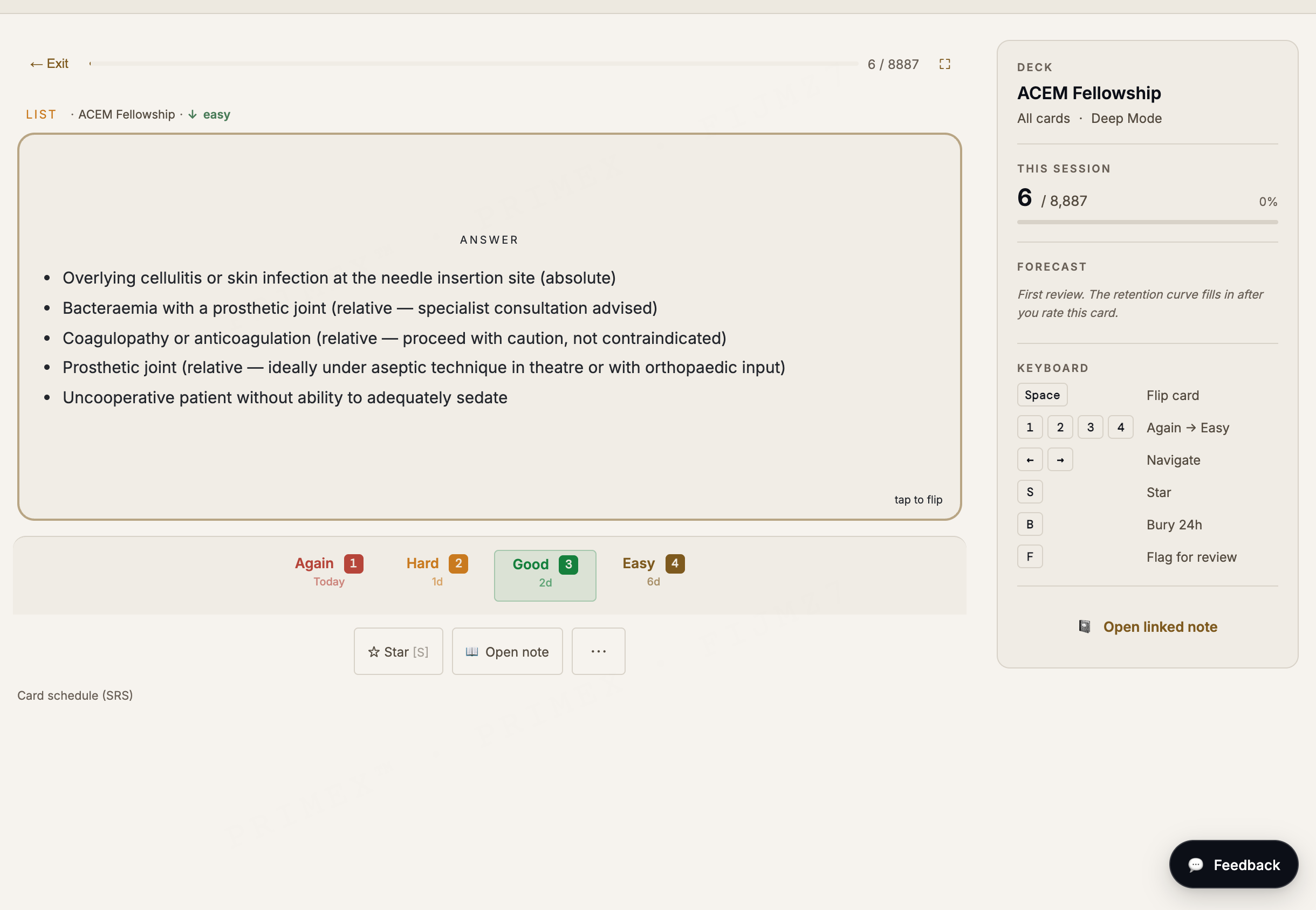
Curriculum-mapped flashcard decks with spaced repetition across every FACEM section. Cards cover clinical management protocols, drug doses, antidotes, toxidrome recognition, communication frameworks, and clinical vignettes. Cards you struggle with come back sooner; cards you know drop back automatically.
- 8,843 cards mapped to the ACEM Fellowship curriculum
- Card types: drug dose, management protocol, toxidrome, communication framework
- Antidote cards: specific doses and indications for common poisonings
- MCQ drill mode for rapid-fire practice between OSCE sessions
- One click from any card to the full study note on that topic
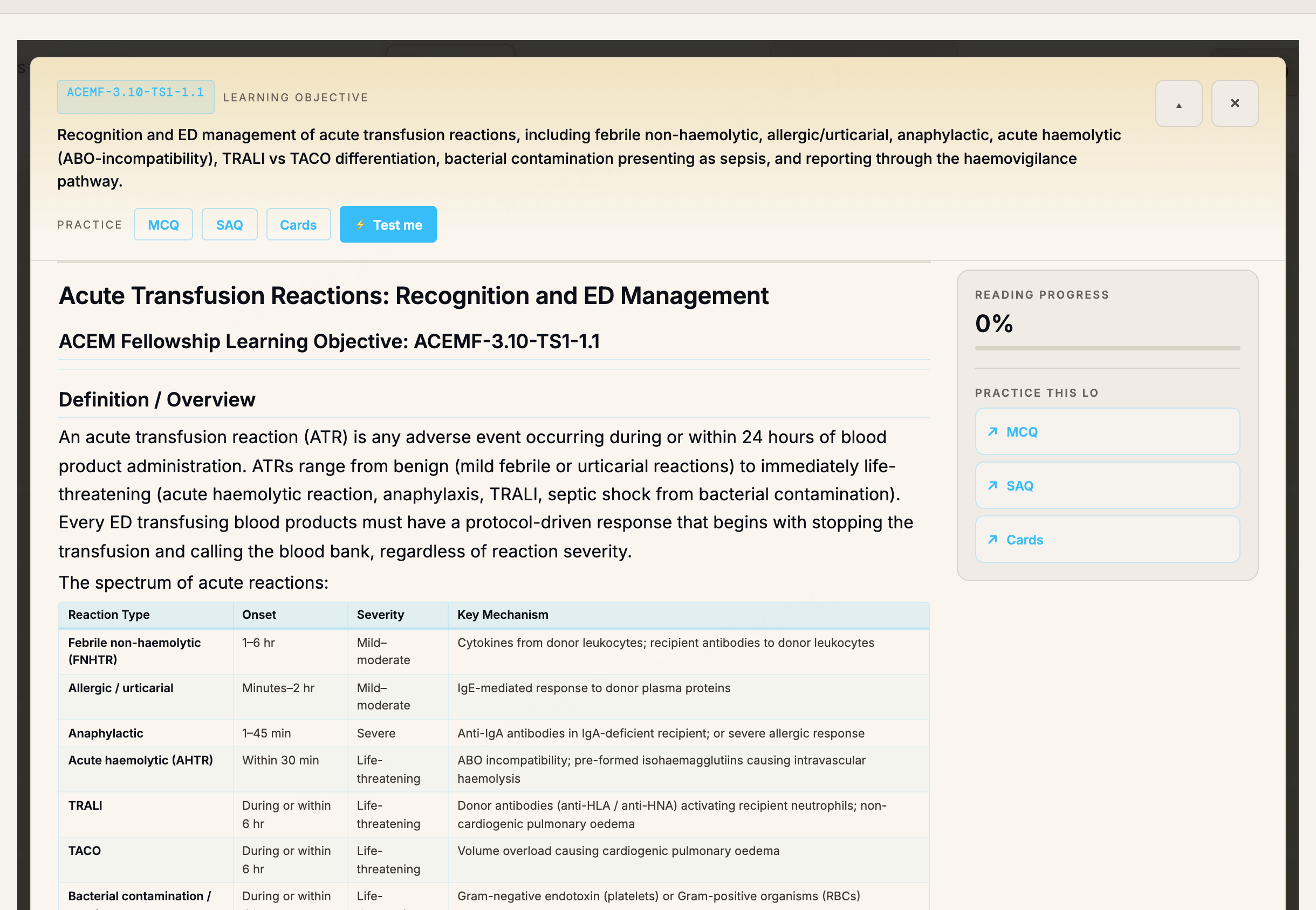
268 sourced study notes across the FACEM curriculum's knowledge and procedural outcomes. Consistent seven-section format, referenced to the published ACEM Fellowship curriculum, Australasian guidelines, and primary literature. Notes surface automatically alongside SAQ and OSCE debriefs, so you move from feedback to the relevant note in one click.
- 268 study notes across the FACEM curriculum's 30 sections and PRIMEX supplementary topics
- Consistent 7-section structure: scannable, not a wall of text
- Mapped to the published ACEM Fellowship curriculum and Australasian guidelines
- Full-text search across all notes
- Linked from SAQ debrief, OSCE feedback, and flashcards
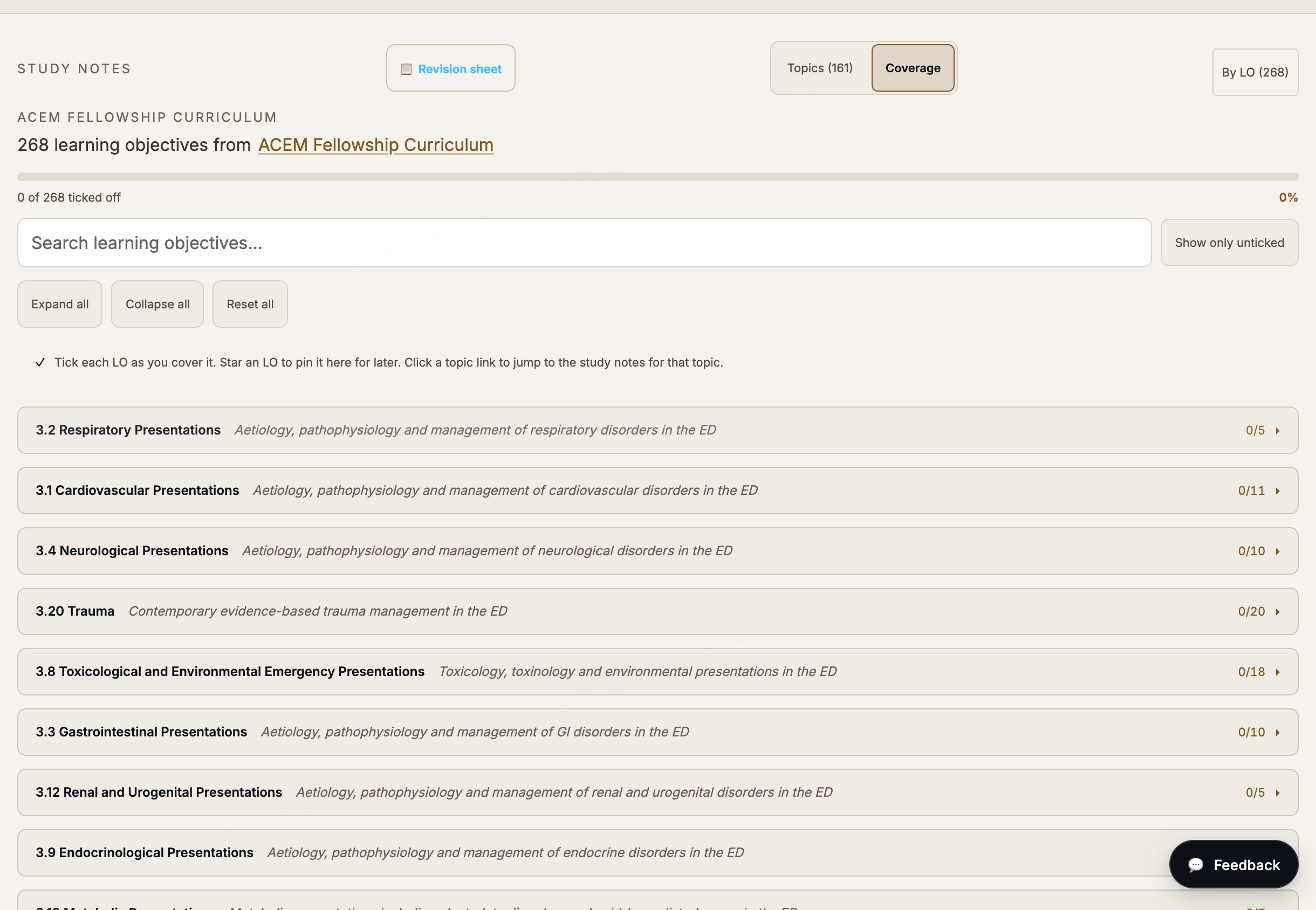
The ACEM Curriculum 2022 (CU440 v4.12, May 2026) spans 30 sections. PRIMEX surfaces its learning objectives in a Curriculum tab with a checkbox checklist and per-section progress bars; each objective row drops you straight into its mapped study note, an MCQ set, an SAQ, or the matching flashcards.
- Learning objectives from the ACEM Curriculum 2022 (CU440 v4.12, May 2026), across its 30 sections
- Curriculum tab with LO checklist and per-section progress bars
- Each LO row launches notes, MCQs, SAQs or flashcards in one click
- Per-LO focused study note for the LOs that need a deeper pass
- Identify gaps before your exam date
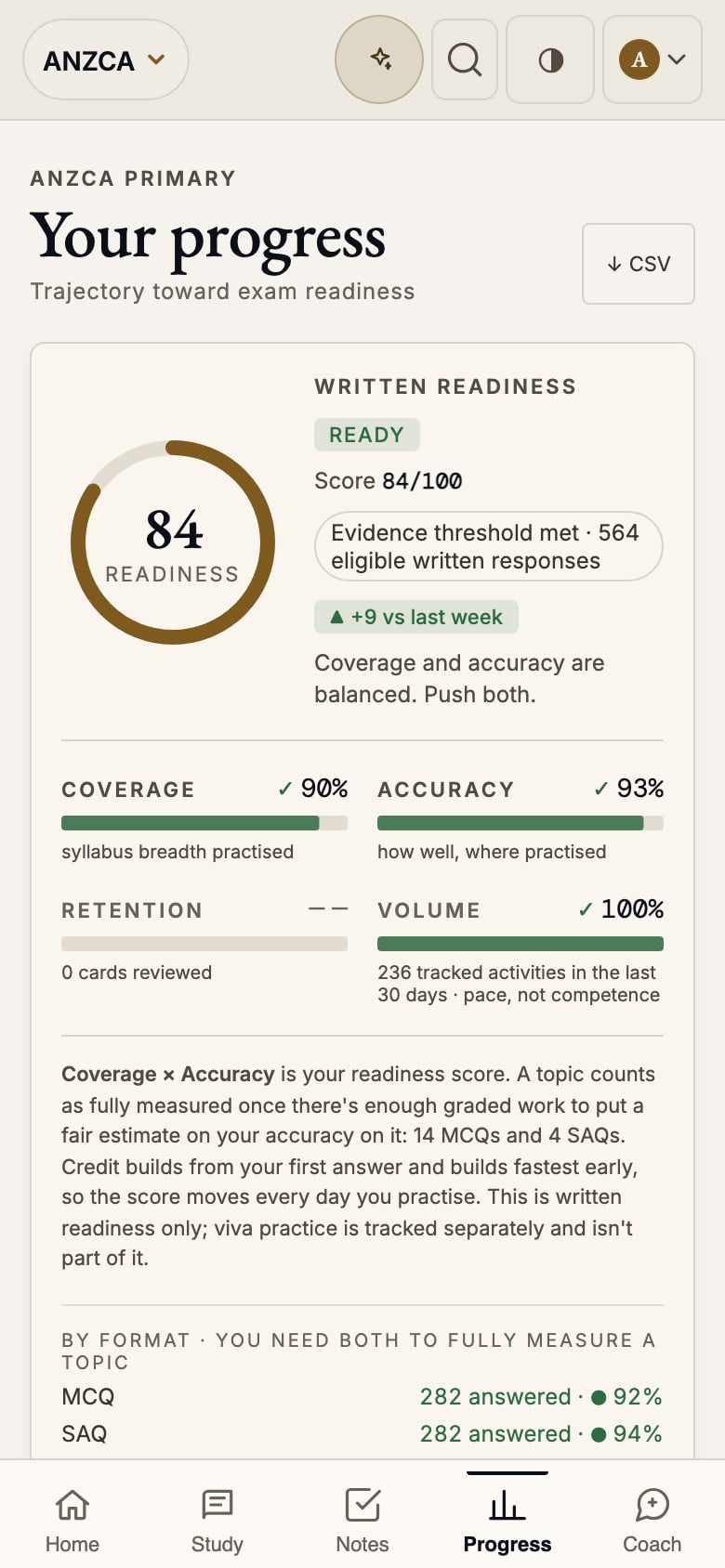
An adaptive study plan counts down to your ACEM Fellowship exam date and tells you what to study next. The written-readiness score combines eligible syllabus coverage with accuracy from recognised written results. Activity pace and supplemental practice are shown separately and do not change the score.
- Days-to-exam countdown and pace tracking, ahead or behind
- Written-readiness score backed by eligible written assessments
- Coverage and accuracy broken out with evidence context
- Activity pace and weekly target shown separately from readiness
- Study this next: the topic queued for today, one tap to open
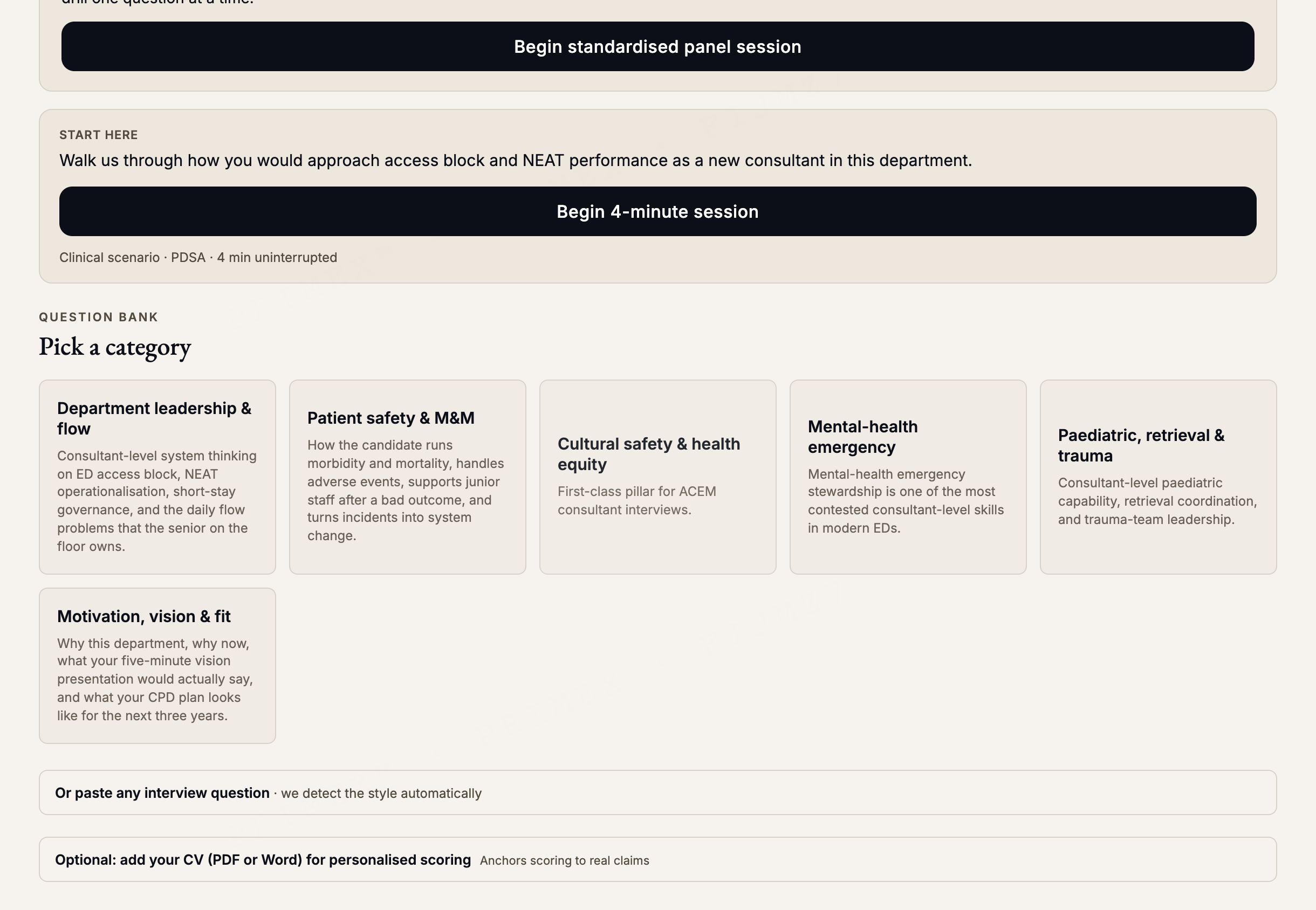
Rehearse the standardised panel interview format Australian and New Zealand hospitals use for emergency-physician staff specialist appointments. Eight standardised questions cover ED flow and access block, NEAT and four-hour operationalisation, morbidity and mortality reviews, mental-health emergency management, paediatric ED capability, retrieval and trauma reception, Indigenous health and cultural safety, and credible motivation for the role. The panel stays silent until your answer is complete. The debrief returns a tier band, per-dimension rubric scores against ACEM CanMEDS-derived domains, framework beat checks, and the moments your answer demonstrated each role.
- Standardised panel format mirrored from NSW Health PD2023_024 and equivalent state recruitment policies
- Eight questions covering ED flow, M and M, mental-health emergency, paediatric ED, retrieval, cultural safety
- Calibrated rubric scoring per dimension with full band descriptions
- ACEM domains (CanMEDS-derived) demonstrated and missed per answer
- Framework beat tracking for STAR-FR, SPIES, PEARLS, PDSA, ISBAR
- Save your CV for grounded model answers tied to your real ED trajectory
ACEM Fellowship format and structure: FACEM written and OSCE
The ACEM Fellowship Examination is the final step to FACEM qualification. It has two components: a written examination of two 180-minute papers (one short-answer SAQ paper and one select-choice SCQ paper, 6 hours total), and a clinical OSCE of up to 12 stations with six station types covering clinical management, communication, physical examination, teaching, clinical synthesis, and case-based discussion. Each OSCE station runs 11 minutes. ACEM publishes no fixed pass-rate percentage: the Fellowship is criterion-referenced and results are released per sitting. PRIMEX is built by Dr Jay Marshall, an anaesthetics registrar in Taree, NSW.
- OrganiserAustralasian College for Emergency Medicine (ACEM)
- FormatWritten examination of two 180-minute papers (SAQ paper + SCQ paper, 6 hours total), then a clinical OSCE of up to 12 stations (11 minutes each)
- DomainsMedical presentations (23 sections), professional competency domains, OSCE station types
- SittingsTwice yearly: written in May and November, clinical OSCE in March and September
- Pass rateACEM publishes no fixed pass-rate percentage; the Fellowship is criterion-referenced and results are released per sitting
ACEM Fellowship pass rates and exam statistics
- Curriculum learning objectives mapped
- 268
- Sourced study notes
- 268
- Spaced-repetition flashcards
- 8,843
- Curriculum sections covered
- 30
- SAQ grading tier
- Fail / Borderline / Pass / Distinction
- OSCE stations per cycle
- 12 (all six ACEM station types)
- Curriculum version
- ACEM Curriculum 2022 (CU440 v4.12, May 2026)
- Trial
- 7 days, free
PRIMEX's ACEM learning objectives are drawn from the ACEM Curriculum 2022 (CU440 v4.12, May 2026), covering the curriculum's knowledge and procedural outcomes across its 30 sections, plus PRIMEX supplementary topics. Each has its own focused study note and is mapped to spaced-repetition flashcards, and the Curriculum tab persists checkbox progress across sessions with per-section progress bars.
Practice every topic with the same AI grader the in-app uses
Five high-yield learning objectives. Free MCQ practice, graded against college-standard marking points. No signup needed.
Cognitive Bias in Emergency Medicine Decision-Making
The emergency department is arguably the highest-risk environment for cognitive error in all of medicine.
Ethical and Medicolegal Frameworks in Emergency Medicine: Refusal of Treatment, Involuntary Assessment, and Substitute Decision-Making
The emergency department sits at the intersection of acute undifferentiated illness, altered cognition.
Mass Casualty Incidents, Disaster Management & the Hospital's Role
A mass casualty incident is any event in which the number of casualties overwhelms the capacity of the local healthcare system to provide usual.
Trauma in Special Populations: Adaptations to Principles of Management
Standard ATLS-derived trauma principles provide the framework for all major trauma patients.
Liked those five? That's a sliver of what's inside.
Get 268 study notes, 8,843 spaced-repetition flashcards, unlimited question practice and the full exam simulator. Free for 7 days, then from A$44.99/month.
Start free trial, 7 days free Cancel anytime · no commitmentCommon questions about the ACEM Fellowship exam
Specialist pricing and 7-day free trial
Specialist unlocks every PRIMEX exam track: the specialist pathways, AMC and Medical Student. Every study tool is included, with no per-feature paywalls.
- ✓ Every exam track: specialist pathways, AMC & Medical Student
- ✓ Flashcards with spaced repetition & MCQ drill
- ✓ Study notes for every curriculum topic
- ✓ SAQ library & sessions
- ✓ Study plan with pace tracking
- ✓ Curriculum tracker & readiness insights
- ✓ Every exam track: specialist pathways, AMC & Medical Student
- ✓ Flashcards with spaced repetition & MCQ drill
- ✓ Study notes for every curriculum topic
- ✓ SAQ library & sessions
- ✓ Study plan with pace tracking
- ✓ Curriculum tracker & readiness insights
- ✓ Every exam track: specialist pathways, AMC & Medical Student
- ✓ Flashcards with spaced repetition & MCQ drill
- ✓ Study notes for every curriculum topic
- ✓ SAQ library & sessions
- ✓ Study plan with pace tracking
- ✓ Curriculum tracker & readiness insights
You'll land on a confirmation page. Tap the sign-up button (or sign in if you already have an account) and your subscription links automatically. If you close the page first, just use the same email when you sign up and it'll still link.