
RACP Paediatrics
neonate to adolescent.
764 study notes and 9,928 flashcards across all 22 RACP Paediatrics categories (764 LOs). AI clinical-reasoning grading on the Fail / Borderline / Pass / Distinction tier, a DCE long and short case simulator, and a DWE-format MCQ library. Built to the exam's weight-based, age-stratified standard.
Your PRIMEX account, now in your pocket.
Specialist unlocks every PRIMEX exam track. Accessible is limited to AMC and Medical Student. Subscribe on the website or in the iPhone app, then use the same account to keep your access and progress together.

RACP Paediatrics & Child Health Exam Dates 2026-2027 (DWE + DCE)
Published dates for the upcoming sittings. Always confirm against the official RACP examinations page before scheduling. I refresh this section quarterly as new windows are announced.
- Divisional Written Exam: FebruaryDWE February 2027: Tue 9 Feb 2027
- Divisional Written Exam: October20 Oct 2026
- Divisional Clinical Exam (DCE)Per accredited site; see official link
- DCE Paediatrics 2027 (AU)14-30 May 2027 (apps close 18 Mar 2027)
Paediatrics DWE shares its date with Adult Medicine. DCE is delivered locally at accredited sites; specific calendars sit on the per-division pages.
Inside PRIMEX, in under a minute
Recorded in the app, with real RACP Paediatrics questions and notes. No sound needed to follow it.
Topics tested in the RACP Paediatrics exam
Practice on real radiology images
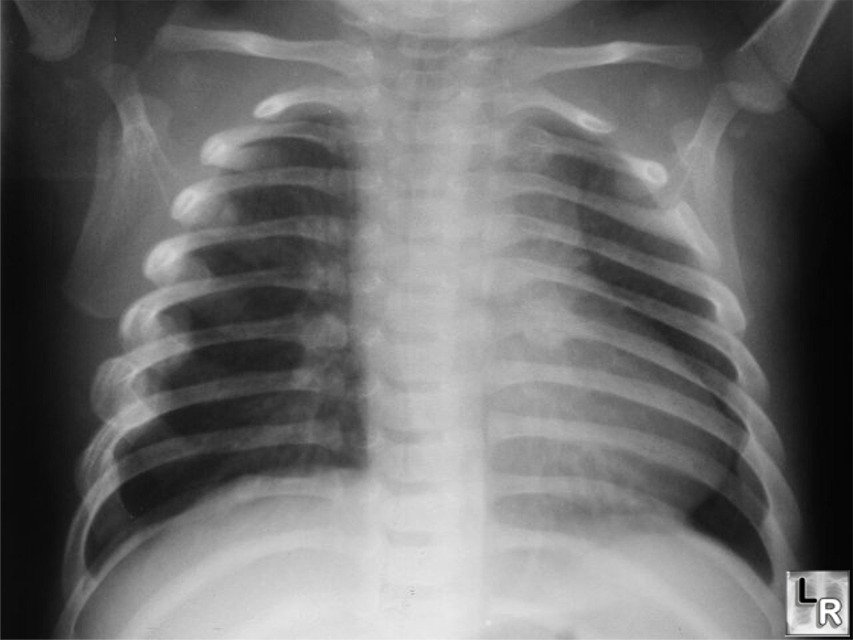
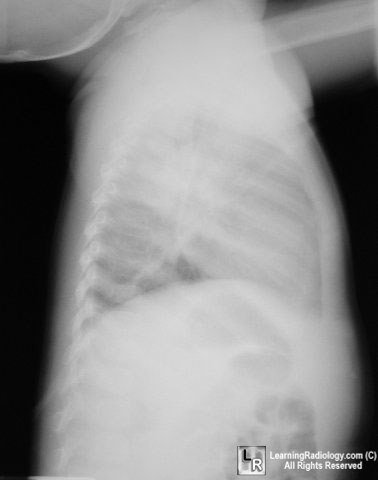
Used with permission from LearningRadiology.com. Every image links to its full teaching case. Tap to open.
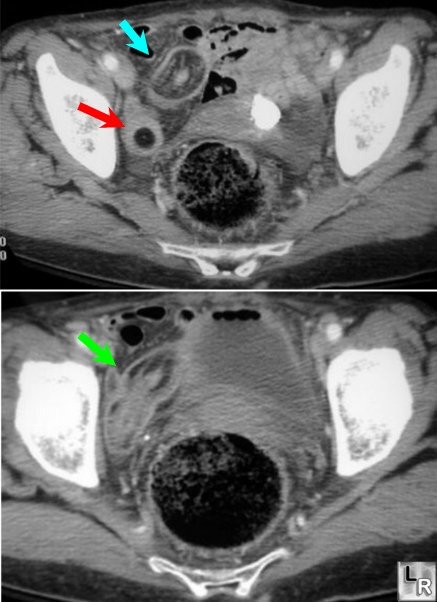 Intussusception (target sign)
 Non-accidental injury (classic metaphyseal lesion)
 Round pneumonia
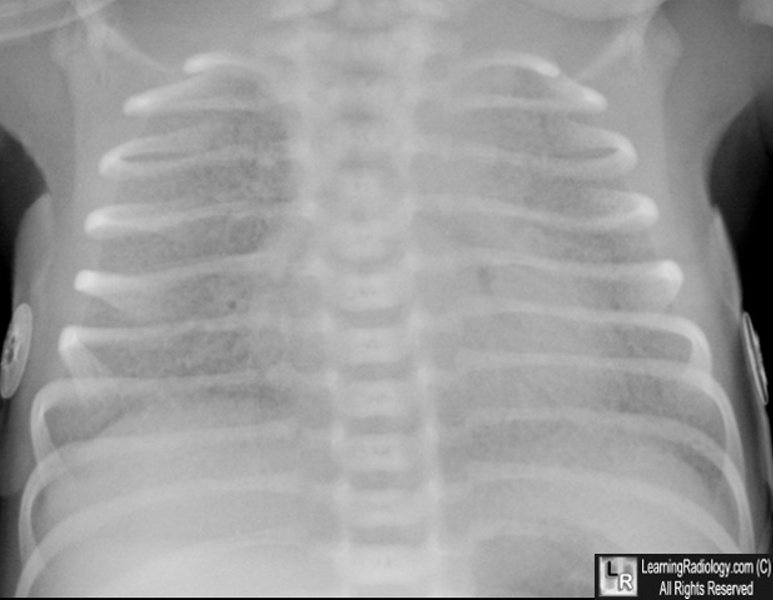 Hyaline membrane disease (neonatal RDS)
How candidates prepare for the RACP Paediatrics
The RACP Paediatrics DWE penalises missing weight-based drug doses, adult thresholds applied without paediatric adjustment, and failure to recognise child protection concerns. Write a structured paediatric clinical reasoning response and get a debrief with tier, every key point flagged, and a Distinction-level model answer with ISPAD, PALS, APEG, and NICE guideline references.
- Fail / Borderline / Pass / Distinction tier, paediatric-specific rubric
- Flags missing weight-based doses and adult threshold misapplications
- Checks for child protection recognition in relevant cases
- Distinction model answers reference ISPAD, APLS, PALS, AAP, NICE guidelines
- AI question generation across all 22 paediatric categories
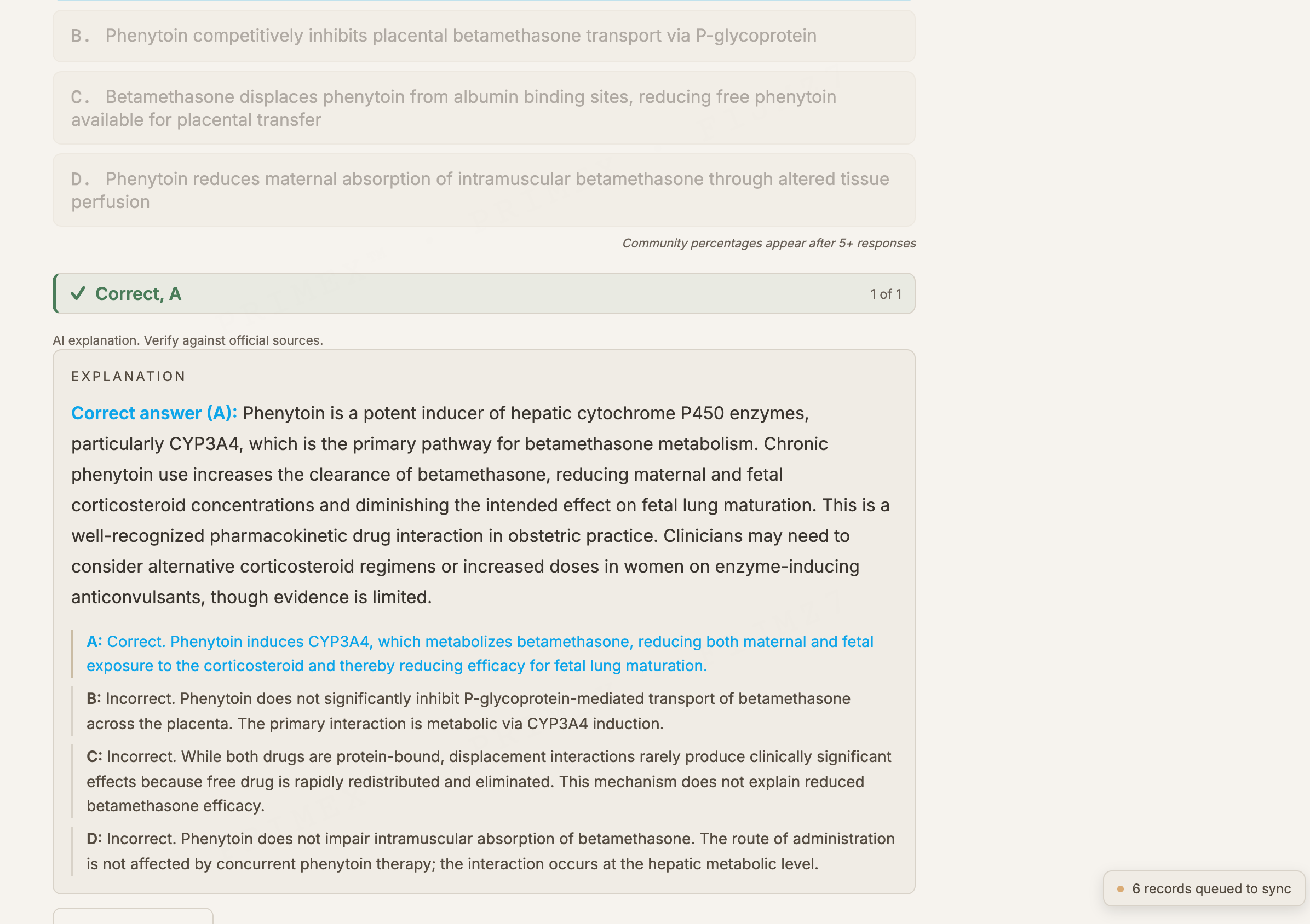
Single-best-answer MCQs across all 22 RACP Paediatrics categories, written at the standard of the RACP Paediatrics DWE with age-stratified normal values, weight-based dosing, and paediatric-specific guideline knowledge. Community answer distributions show how other RACP Paediatrics candidates responded.
- DWE-format SBA MCQs with paediatric-specific clinical complexity
- Uses age-stratified values: vital signs, BP percentiles, developmental milestones
- Weight-based dosing in explanations, not adult shortcuts
- Community answer distribution after each question
- Timed mock mode: 170 questions across 2 papers, paper-based format
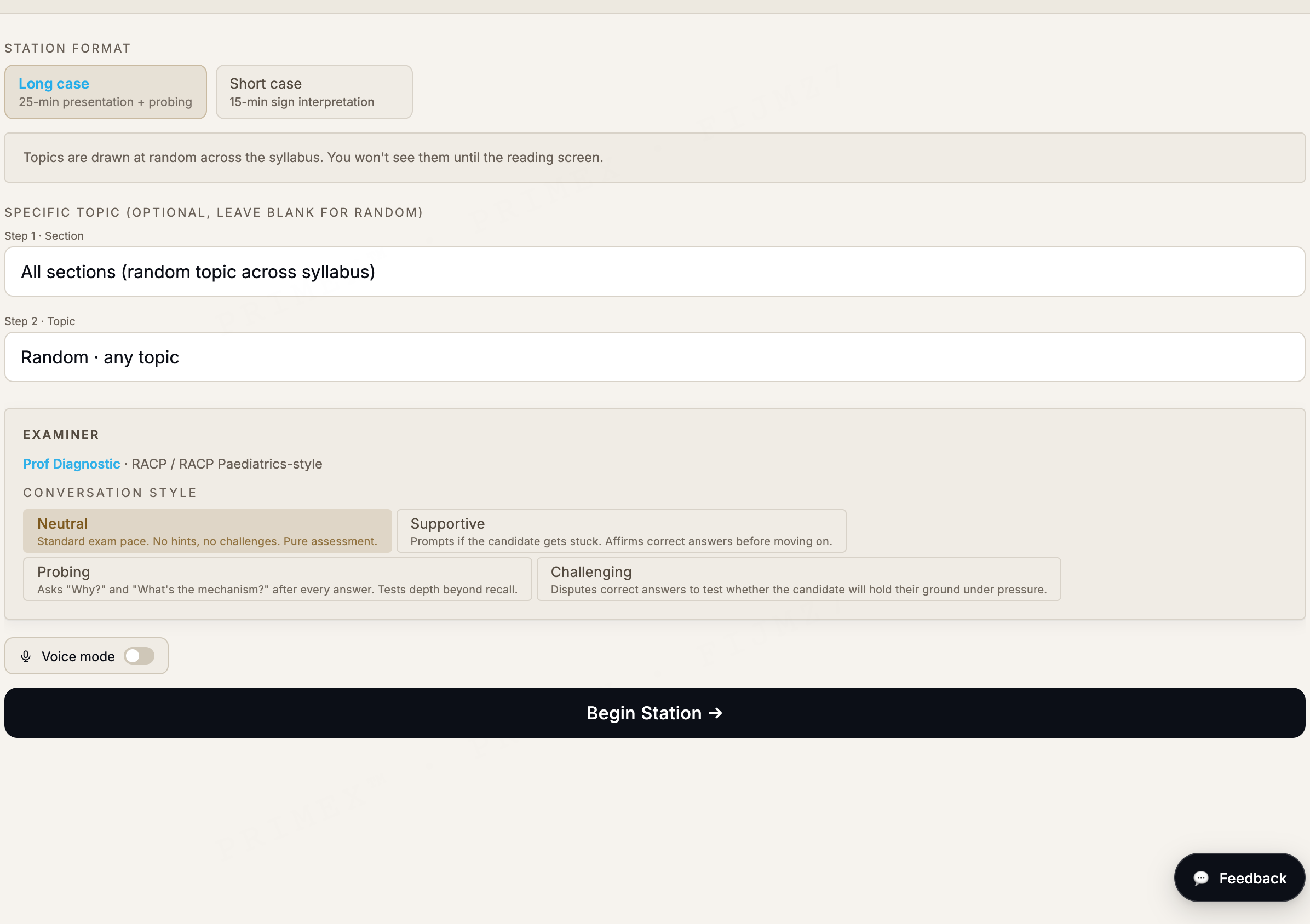
Simulates both DCE formats for paediatric medicine. Long case: present a complex paediatric patient with multi-system involvement to an AI examiner for 25 minutes. Short case: interpret specific examination findings in a child. Expects age-stratified values, weight-based dosing, and paediatric-specific guideline knowledge throughout. Voice mode included.
- Long case: structured summary, then probing across problem list and management
- Short case: paediatric physical findings described, interpretation probed
- Probes for named guidelines: ISPAD, APLS/PALS, NICE, AAP, APEG
- Voice mode: speak your answer, no typing needed
- Debrief on clinical acumen, reasoning, management, and communication
PRIMEX's RACP Paediatrics flashcard deck is built one card set per learning objective, matching the RACP curriculum's structure across the 22 categories. Cards follow the same learning objectives as the study notes.
- 9,928 cards across 354 learning-objective topics
- Card types include age-stratified thresholds (vital signs, BP percentiles, bilirubin), paediatric dosing (ceftriaxone, adrenaline, dexamethasone, insulin), developmental milestones, GMFCS / Westley / Kocher
- MCQ drill mode and one-click link to the matching study note
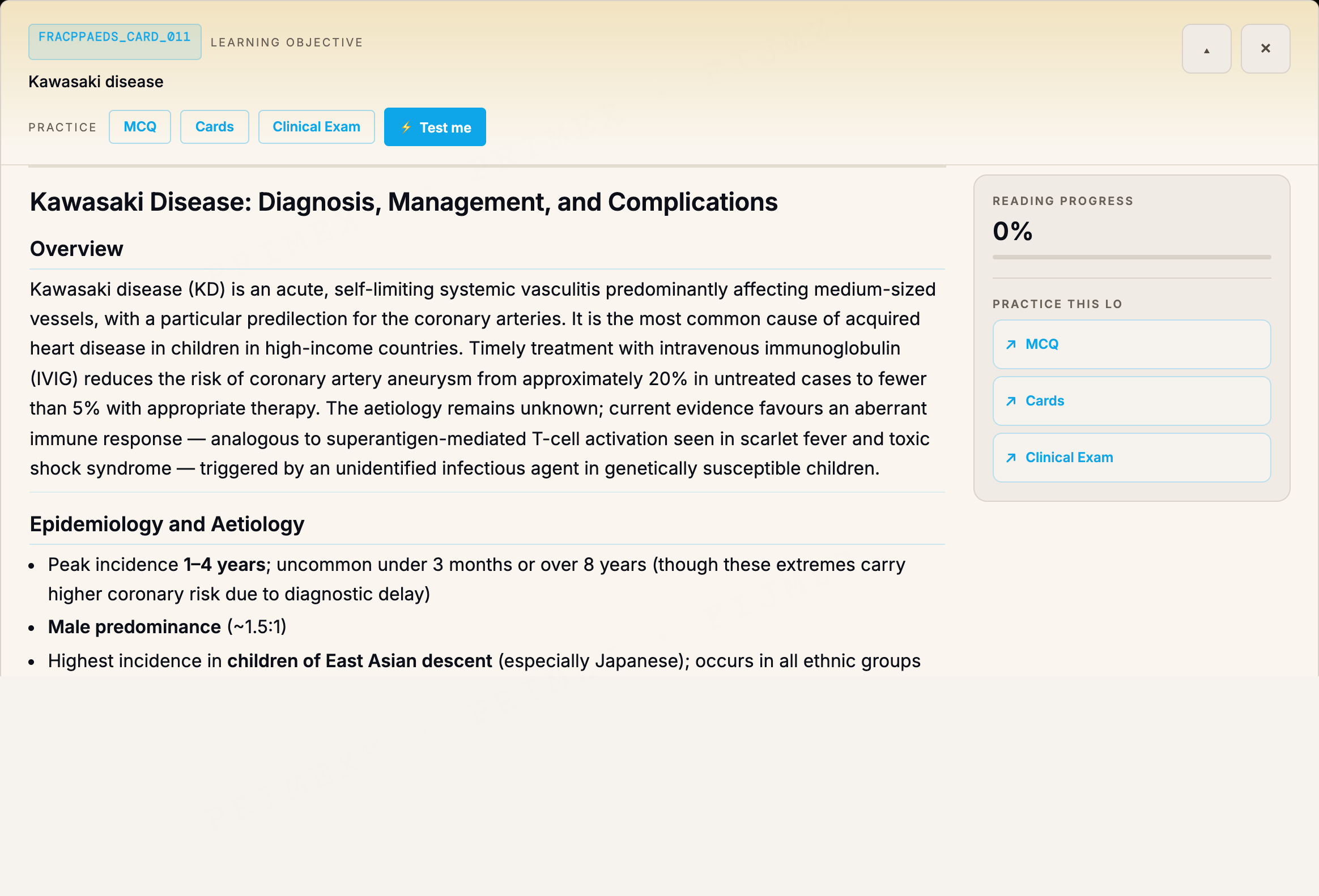
764 study notes across the RACP Paediatrics curriculum, one for every covered learning objective. Written to a consistent seven-section format with paediatric-specific normal values, weight-based dosing protocols, and references to ISPAD, PALS, NICE, AAP, and Australian paediatric guidelines. They surface automatically from MCQ results and DCE debriefs.
- 764 study notes across all 22 categories, one per covered LO
- Consistent 7-section structure with paediatric-specific normal values embedded
- Referenced to ISPAD, APLS, PALS, RCH guidelines, AAP, NICE throughout
- Full-text search across all notes
- Linked from MCQ explanations, DCE case feedback, and flashcards
RACP Paediatrics format and structure: DWE and DCE
The RACP Paediatrics Divisional exams (DWE and DCE) assess Basic Training-level knowledge and clinical judgement across all paediatric medicine categories: from neonatology and developmental paediatrics to adolescent medicine and child protection. The Divisional Written Examination is 170 questions across two paper-based MCQ papers (4-option single best answer MCQs and EMQs, no negative marking), demanding age-stratified values and weight-based paediatric guideline knowledge. The Divisional Clinical Examination is held at a separate hospital and involves two long cases and four short cases with real paediatric patients. RACP publishes per-sitting pass rates by component: the DWE Paediatrics pass rate was 75.9% in February 2026 (79.3% Feb 2025, 86.2% Feb 2024), and the 2025 Paediatrics DCE pass rate was 85.4%. PRIMEX is built by Dr Jay Marshall, an anaesthetics registrar in Taree, NSW.
- OrganiserRoyal Australasian College of Physicians (RACP)
- FormatDivisional Written Examination (170 questions: Paper 1 = 92 MCQ + 8 EMQ; Paper 2 = 66 MCQ + 4 EMQ; 4-option single best answer; paper-based; no negative marking) and Divisional Clinical Examination (2 long cases: 60 min patient + 10 min prep + 25 min discussion; 4 short cases: 2 min stem + 15 min each)
- Categories22 curriculum categories: neonatal & perinatal medicine, acute care, developmental paediatrics, adolescent & young adult medicine, child safety & maltreatment, rural paediatrics, cardiology, dermatology, endocrinology & metabolic medicine, ear nose & throat, gastroenterology, genitourinary & gynaecology, haematology & oncology, immunology & allergy, infectious disease, inflammatory & rheumatological, kidney, mental health, musculoskeletal, neurology & rehabilitation, respiratory & sleep, and foundations & cross-cutting issues
- SittingsTwice yearly, February and October
- Pass rateDWE Paediatrics 75.9% (RACP, Feb 2026); rates vary by component and sitting. See past DWE results
Free notes are just the start.
Get 764 study notes, unlimited question practice and the full exam simulator. Free for 7 days, then from A$44.99/month.
Start free trial, 7 days free Cancel anytime · no commitmentCommon questions about the RACP Paediatrics exam
Specialist pricing and 7-day free trial
Specialist unlocks every PRIMEX exam track: the specialist pathways, AMC and Medical Student. Every study tool is included, with no per-feature paywalls.
- ✓ Every exam track: specialist pathways, AMC & Medical Student
- ✓ Flashcards with spaced repetition & MCQ drill
- ✓ Study notes for every curriculum topic
- ✓ DCE long & short case simulator, DWE MCQ/EMQ practice
- ✓ Study plan with pace tracking
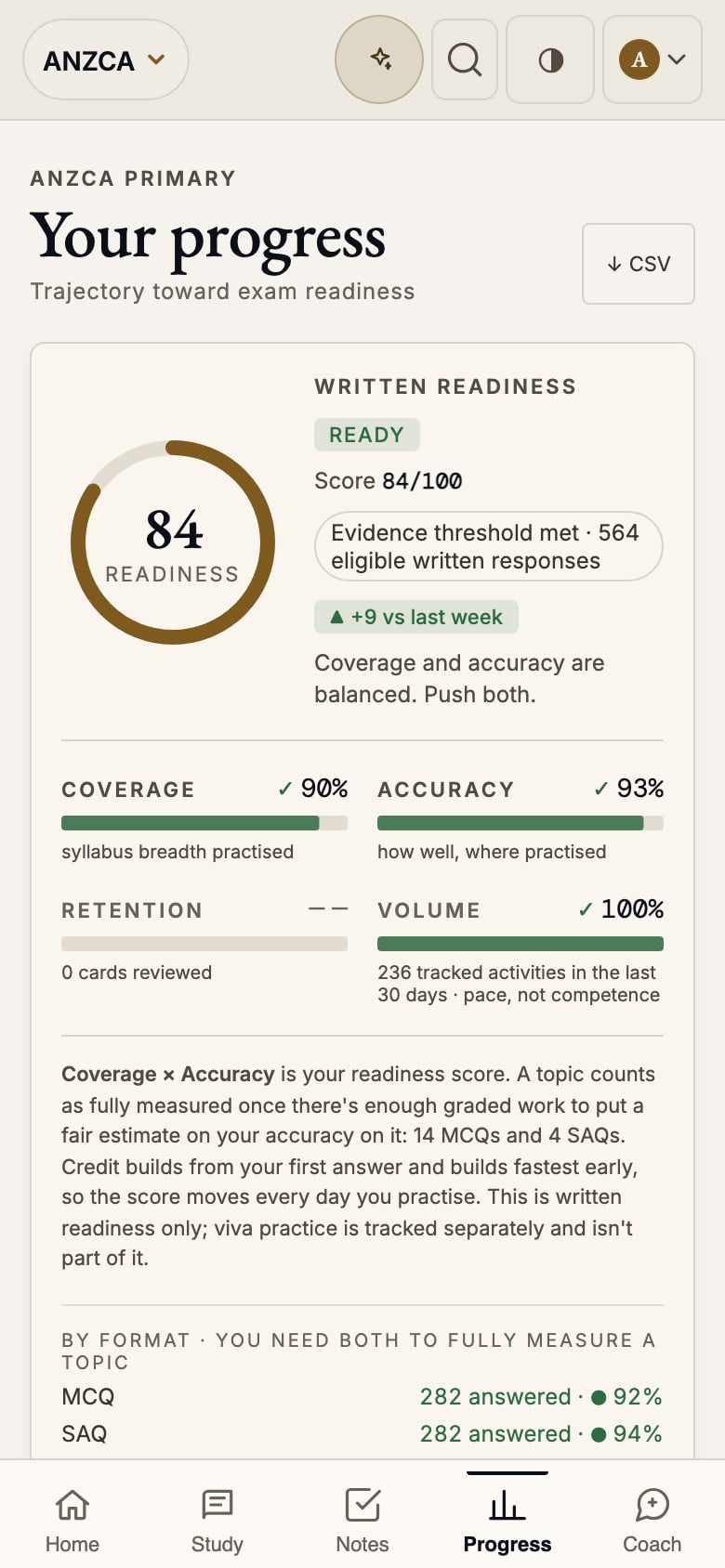
- ✓ Curriculum tracker & readiness insights
- ✓ Every exam track: specialist pathways, AMC & Medical Student
- ✓ Flashcards with spaced repetition & MCQ drill
- ✓ Study notes for every curriculum topic
- ✓ DCE long & short case simulator, DWE MCQ/EMQ practice
- ✓ Study plan with pace tracking
- ✓ Curriculum tracker & readiness insights
- ✓ Every exam track: specialist pathways, AMC & Medical Student
- ✓ Flashcards with spaced repetition & MCQ drill
- ✓ Study notes for every curriculum topic
- ✓ DCE long & short case simulator, DWE MCQ/EMQ practice
- ✓ Study plan with pace tracking
- ✓ Curriculum tracker & readiness insights
You'll land on a confirmation page. Tap the sign-up button (or sign in if you already have an account) and your subscription links automatically. If you close the page first, just use the same email when you sign up and it'll still link.