FRACP Paediatrics
your patients.
DWE MCQ practice, age-specific clinical reasoning grader, DCE long case and short case simulator, spaced-repetition flashcards, and sourced study notes across all 13 paediatric medicine categories. Every feature built to the weight-based, age-stratified standard of the FRACP Paediatrics exam.
One complete paediatrician.
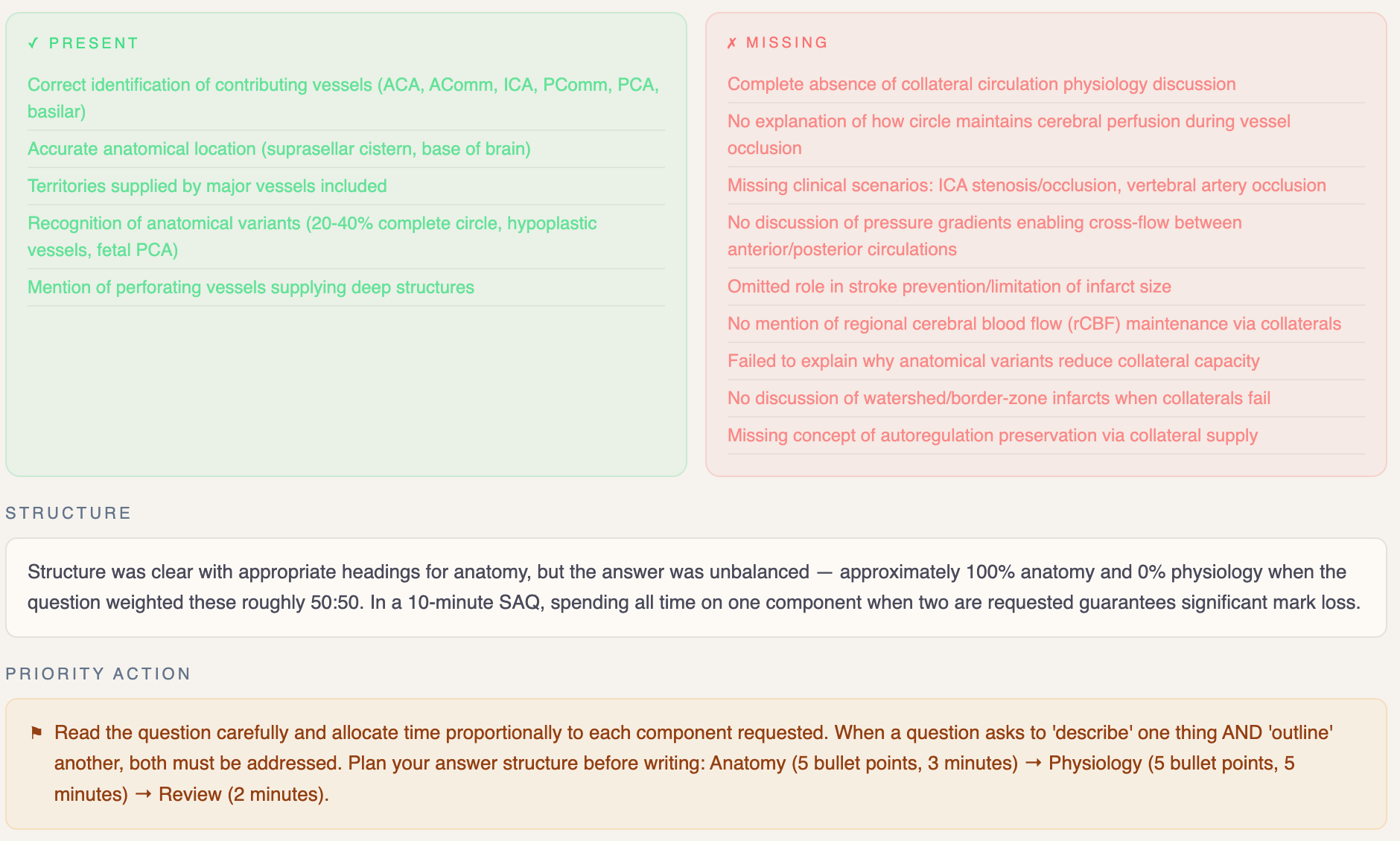
The FRACP Paediatrics DWE penalises missing weight-based drug doses, adult thresholds applied without paediatric adjustment, and failure to recognise child protection concerns. Write a structured paediatric clinical reasoning response and get a debrief with tier, every key point flagged, and a Distinction-level model answer with ISPAD, PALS, APEG, and NICE guideline references.
- Fail / Borderline / Pass / Distinction tier, paediatric-specific rubric
- Flags missing weight-based doses and adult threshold misapplications
- Checks for child protection recognition in relevant cases
- Distinction model answers reference ISPAD, APLS, PALS, AAP, NICE guidelines
- AI question generation across all 13 paediatric categories
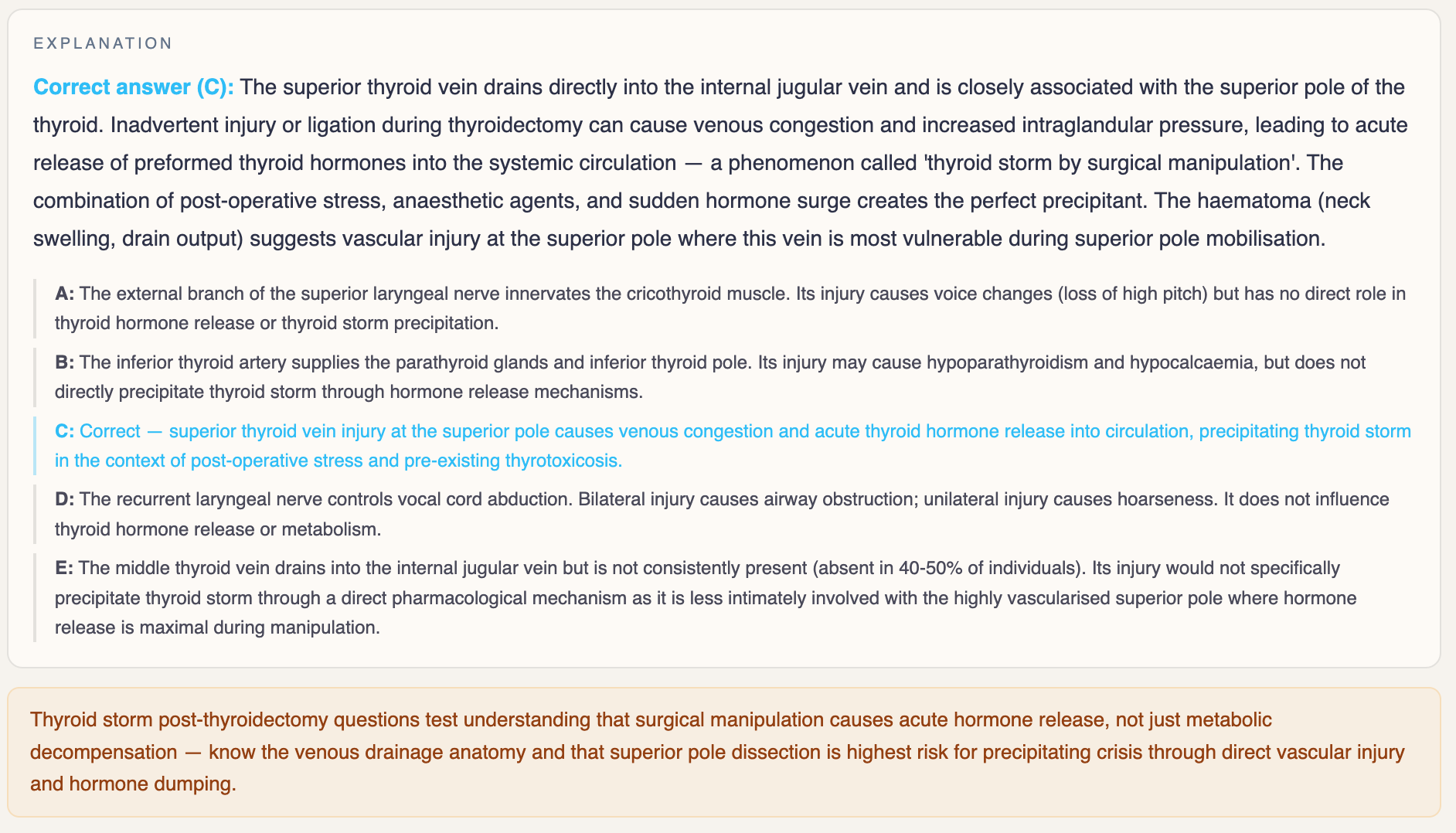
Single-best-answer MCQs across all 13 FRACP Paediatrics categories, written at FRACP consultant-entry level with age-stratified normal values, weight-based dosing, and paediatric-specific guideline knowledge. Community answer distributions show how other FRACP Paediatrics candidates responded.
- DWE-format SBA MCQs with paediatric-specific clinical complexity
- Uses age-stratified values: vital signs, BP percentiles, developmental milestones
- Weight-based dosing in explanations, not adult shortcuts
- Community answer distribution after each question
- Timed mock mode: 130 questions, 3 hours
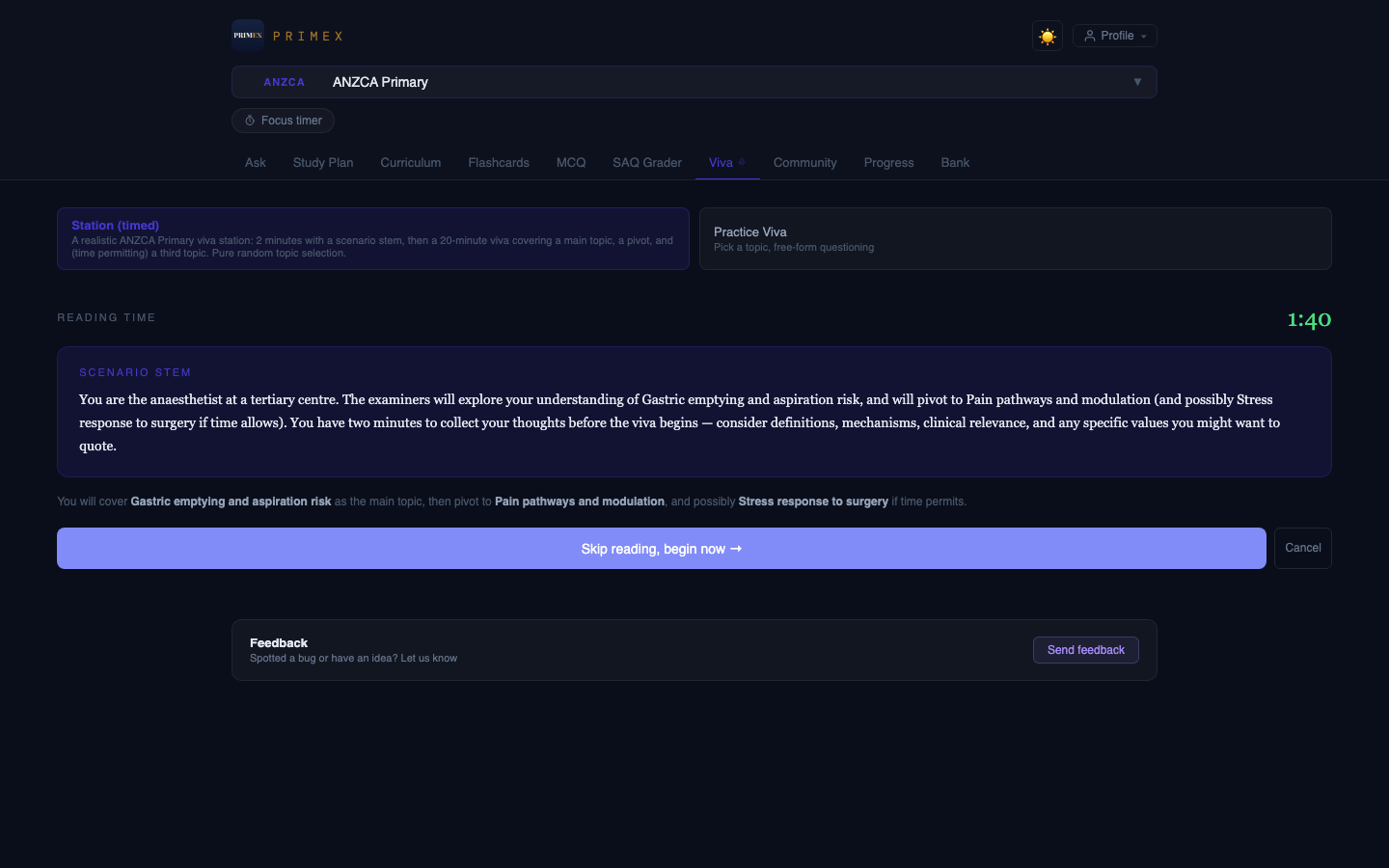
Simulates both DCE formats for paediatric medicine. Long case: present a complex paediatric patient with multi-system involvement to an AI examiner for 25 minutes. Short case: interpret specific examination findings in a child. Expects age-stratified values, weight-based dosing, and paediatric-specific guideline knowledge throughout. Voice mode included.
- Long case: structured summary, then probing across problem list and management
- Short case: paediatric physical findings described, interpretation probed
- Probes for named guidelines: ISPAD, APLS/PALS, NICE, AAP, APEG
- Voice mode: speak your answer, no typing needed
- Debrief on clinical acumen, reasoning, management, and communication
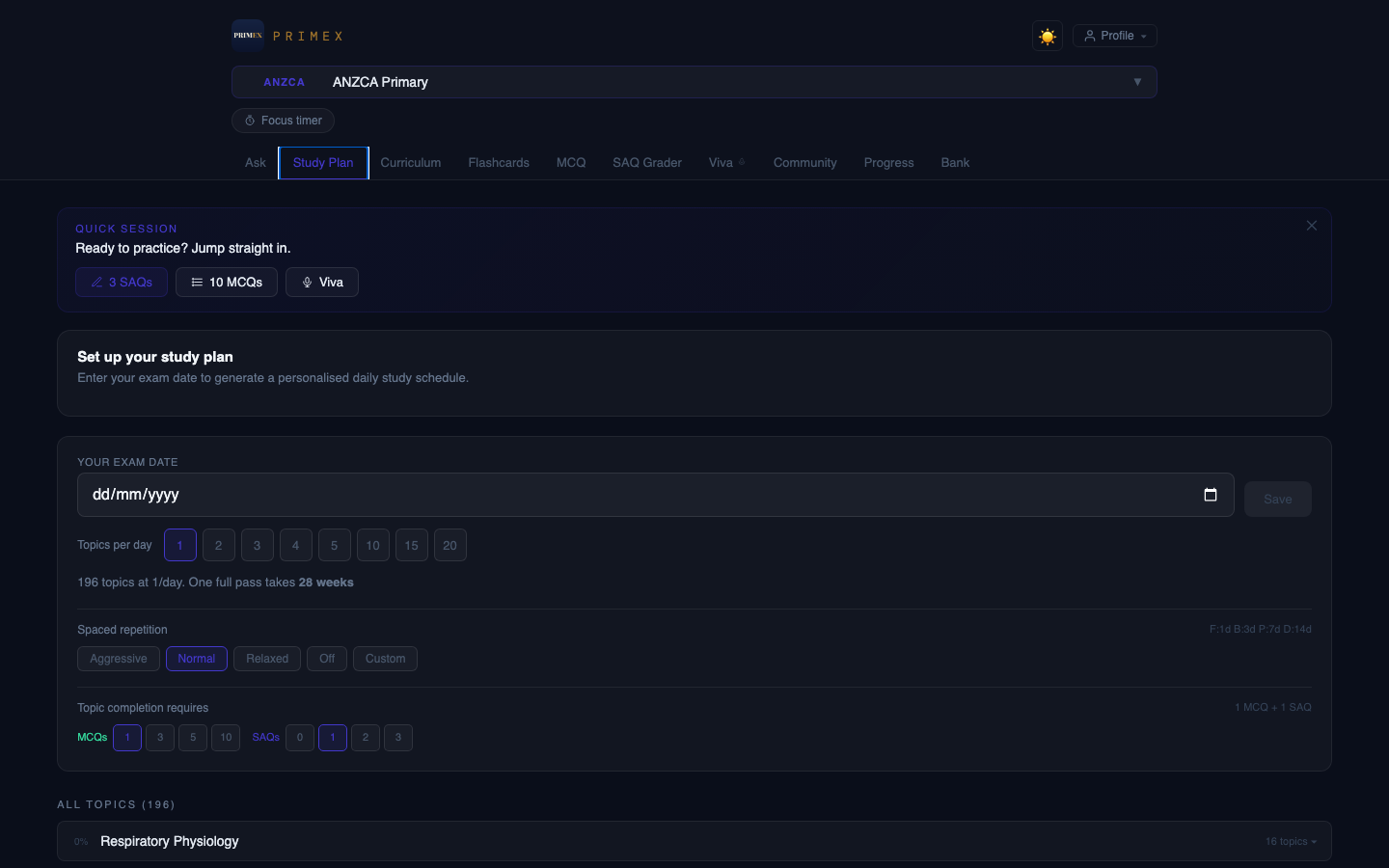
Curriculum-mapped flashcard decks across all paediatric categories with spaced repetition. Covers age-stratified thresholds, weight-based drug protocols, paediatric staging and scoring systems, developmental milestones, and clinical vignettes from neonatology to adolescent medicine.
- Spaced repetition: review what you're forgetting, not what you know
- Age-stratified thresholds: vital signs, BP percentiles, bilirubin levels
- Paediatric dosing cards: ceftriaxone, adrenaline, dexamethasone, insulin
- Developmental milestones and scoring systems (GMFCS, Westley, Kocher)
- MCQ drill mode and one-click link to full study notes
Sourced, structured study notes for all 137 topics across 13 paediatric categories. Written to a consistent seven-section format with paediatric-specific normal values, weight-based dosing protocols, and references to ISPAD, PALS, NICE, AAP, and Australian paediatric guidelines. Surface automatically from MCQ results and DCE debriefs.
- All 137 paediatric topics covered across 13 categories
- Consistent 7-section structure with paediatric-specific normal values embedded
- Referenced to ISPAD, APLS, PALS, RCH guidelines, AAP, NICE throughout
- Full-text search across all notes
- Linked from MCQ explanations, DCE case feedback, and flashcards
The FRACP Paediatrics fellowship examination assesses consultant-level knowledge and clinical judgement across all paediatric medicine categories: from neonatology and developmental paediatrics to adolescent medicine and child protection. The Divisional Written Examination is ~130 single-best-answer MCQs demanding age-stratified values and weight-based paediatric guideline knowledge. The Divisional Clinical Examination is held at a separate hospital and involves two long cases and four short cases with real paediatric patients. Pass rates sit around 60% per attempt.
- OrganiserRoyal Australasian College of Physicians (RACP)
- FormatDivisional Written Examination (~130 SBA MCQs, 3 hours) and Divisional Clinical Examination (2 long cases: 60 min with patient + 25 min with examiners; 4 short cases: 15 min each)
- CategoriesNeonatology, Respiratory, Cardiovascular, GI & Hepatology, Neurology, Developmental & Behavioural, Endocrinology, Nephrology, Haematology & Oncology, Infectious Diseases, Child Protection, Adolescent Medicine, Acute & Perioperative
- SittingsTwice yearly, typically May and November
- Pass rateApproximately 60% per sitting
- Sourced study notes covering every FRACP Paediatrics topic
- Per-LO focused notes mapped to the RACP Paediatrics curriculum
- Curriculum tab with checkboxes and per-section progress bars
- Spaced-repetition flashcards across 13 card types
- Unlimited curriculum-mapped MCQ practice with full option explanations
- AI long-case and short-case debriefs with consultant-standard model answers
- RACP General Paediatrics Advanced Training Curriculum (November 2023)
- RCH Clinical Practice Guidelines (rch.org.au/clinicalguide)
- ISPAD Clinical Practice Consensus Guidelines
- RACP Advanced Training (Paediatrics) page (racp.edu.au)
- Royal Children's Hospital Melbourne guidelines (rch.org.au)
- APLS / PALS protocols for emergency paediatric management
a 7-day free trial.
- ✓ One specialist exam (your choice)
- ✓ Study notes for every curriculum topic
- ✓ Flashcards with spaced repetition
- ✓ 10 MCQs per topic (sampler)
- ✓ Study plan with pace tracking
- ✗ AI DCE Long & Short Case simulation
- ✗ Clinical Reasoning Grader & AI marking
- ✗ MCQ drill mode
- ✗ SAQ question bank & sessions
- ✗ Community feed
- ✓ All 21 specialist exams: SAQ, MCQ, Viva & Voice
- ✓ Flashcards with spaced repetition & MCQ drill
- ✓ Study notes for every curriculum topic
- ✓ SAQ question bank & sessions
- ✓ Study plan with pace tracking
- ✓ Community feed
- ✓ All 21 specialist exams: SAQ, MCQ, Viva & Voice
- ✓ Flashcards with spaced repetition & MCQ drill
- ✓ Study notes for every curriculum topic
- ✓ SAQ question bank & sessions
- ✓ Study plan with pace tracking
- ✓ Save 20% vs monthly
- ✓ All 21 specialist exams: SAQ, MCQ, Viva & Voice
- ✓ Flashcards with spaced repetition & MCQ drill
- ✓ Study notes for every curriculum topic
- ✓ SAQ question bank & sessions
- ✓ Study plan with pace tracking
- ✓ Save 40% vs monthly plan
After payment, you'll land on a confirmation page. Click the button there to create your account and your subscription links automatically. If you pay with Apple Pay or Google Pay, use the button on that confirmation page before closing it. No email matching needed; it connects via a one-time link.